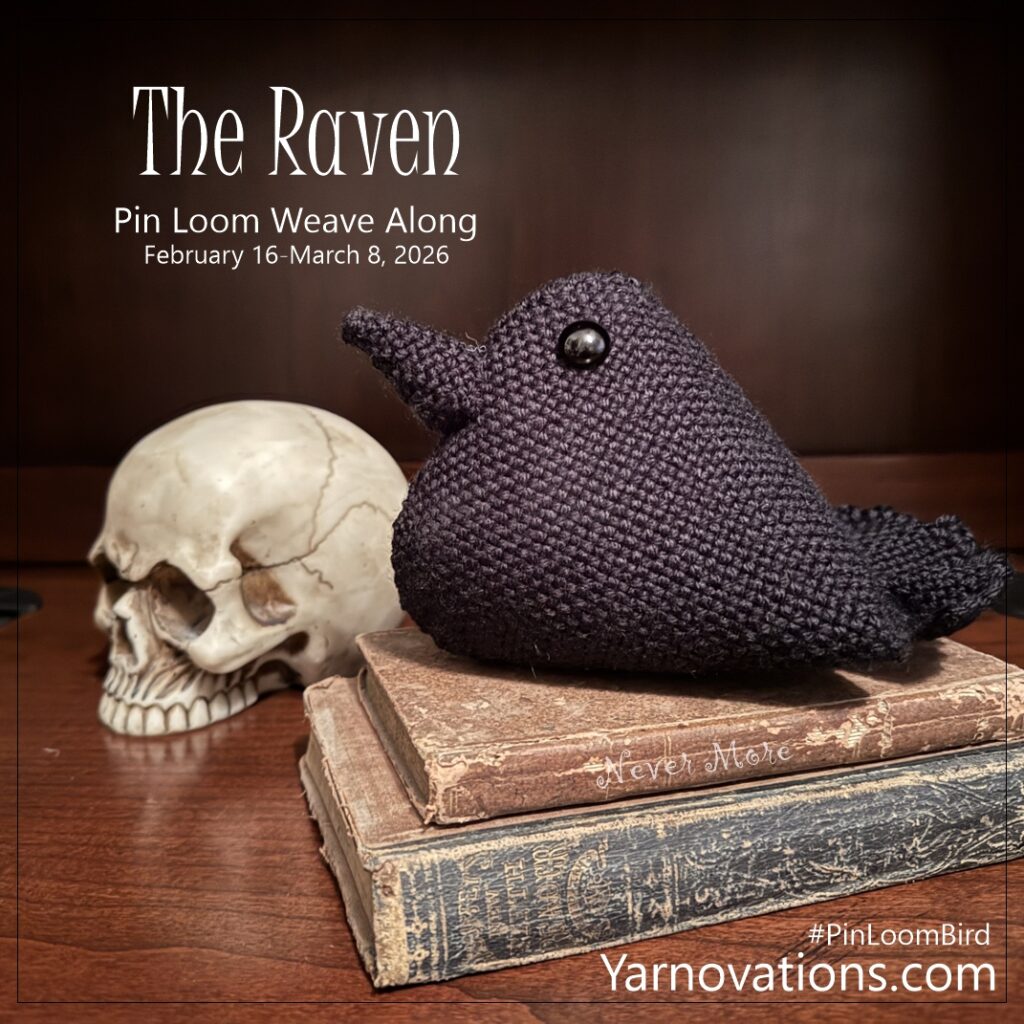
Raven Pin Loom Weave Along

Love to pin loom weave? Love to see how other people have woven the same pattern? Join us for a pin loom weave along February 16 – March 8, 2026 as we make The Raven. It’s completely free. Here’s how to participate in The Raven weave along:

  • Download The Raven pin loom pattern here or from the Facebook Group: Pin Loom Weaving Support Group files.
  • Weave your raven (or other bird from The Pin Loom Flock).
  • Watch video snippet on The Pin Loom Raven Assembly below or on YouTube.
  • Post pictures on social media with hashtag #PinLoomBird.
  • Email a photo of your bird to us (see pattern for instructions) between February 16 – March 8, 2026.
  • Look for compilation photo of other birds in the Facebook group: Pin Loom Weaving Support Group.

The Raven Assembly Video

The Raven pin loom bird is surprisingly simple to make. Even so, we decided an assembly video would make it even easier to visualize the process. View the Pin Loom Raven Assembly on YouTube or below:

The Raven Supplies

The Raven requires very few supplies. You’ll need a few looms, some yarn, stuffing and safety eyes. The weaving pattern includes this list…but if you want to see if you have them off hand, here’s what you’ll need to make your own raven:

  • Pin Looms Squares: 2” and 6”
  • Pin Loom Rectangle: 2” x 6”
  • Needle: 6” needle for weaving and yarn needle for sewing
  • Stuffing
  • Safety Eyes: 14mm – (2) per bird

The Pin Loom Flock is Part of the Weave Along

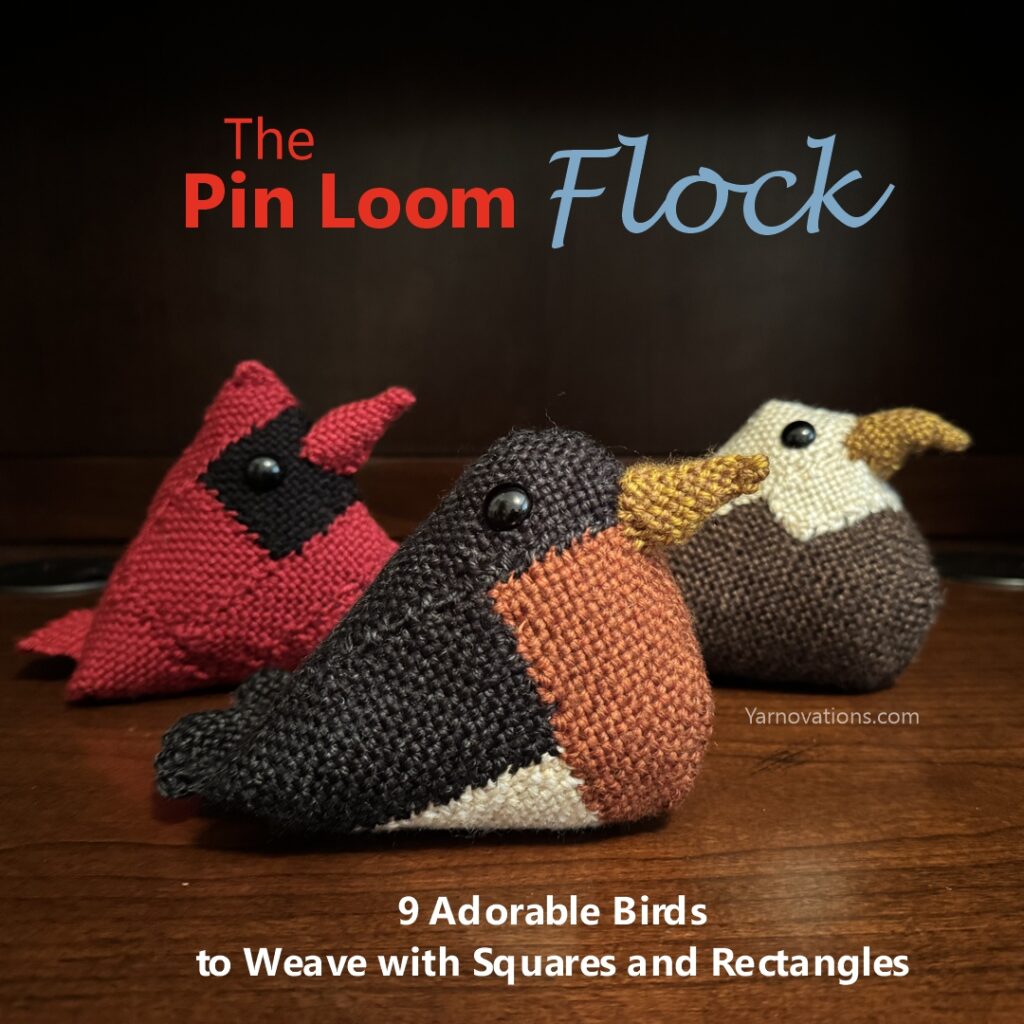
The Raven pin loom weave along is open for all the birds in our pin loom collection. We have an ebook with 9 adorable birds called The Pin Loom Flock on Etsy. Learn more about that in our Etsy shop: YarnovationsShop.

Weave the raven or bird of your choice, post it online with hashtag #PinLoomBird, and email us a photo per instructions in the pattern to be included in the compilation photo in the Facebook group.
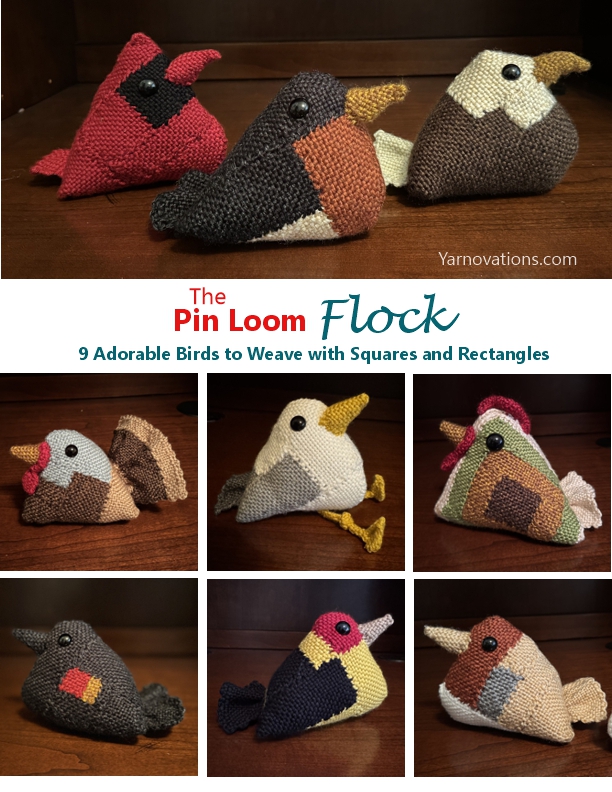
eBook "The Pin Loom Flock: 9 Adorable Birds to Weave with Squares and Rectangles". Woven birds shown include cardinal, robin, bald eagle, turkey, seagull, chicken, red-winged black bird, western tanager, european robin.

We look forward to seeing everyone’s pin loom birds!
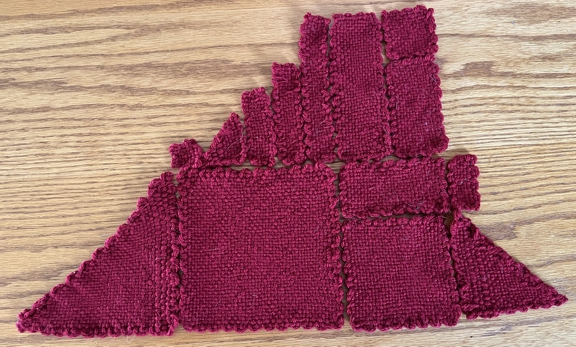
Weave a Pin Loom Triangle

Pin looms come in lots of shapes and sizes….including the humble triangle. This shape is a powerhouse for weaving fun projects. It extends the boundaries of creativity, making it a must have for your pin loom collection.

As it is with weaving a pin loom square, so it is with the triangle. The process for weaving a triangle is the same no matter the size. We’ll demonstrate how to weave on a 2″ triangle, but keep in mind that a 4″ and 6″ weave the same…they simply have more repeats.

Pin looms can be found at some independent yarn shops, Etsy and Amazon. And you can build your own pin loom. There are 2 different types of pin looms: ones with evenly spaced pins and those with a 3 pin configuration. This post teaches you how to pin loom weave a triangle with a 3 pin configuration.

How to Weave a Pin Loom Triangle VIDEO

Weaving a pin loom triangle is simple, but can be a bit frustrating because warp strands are closer together (especially at the corners). Learn how to weave a triangle with this short video.

Weave a Pin Loom Triangle – Illustrations

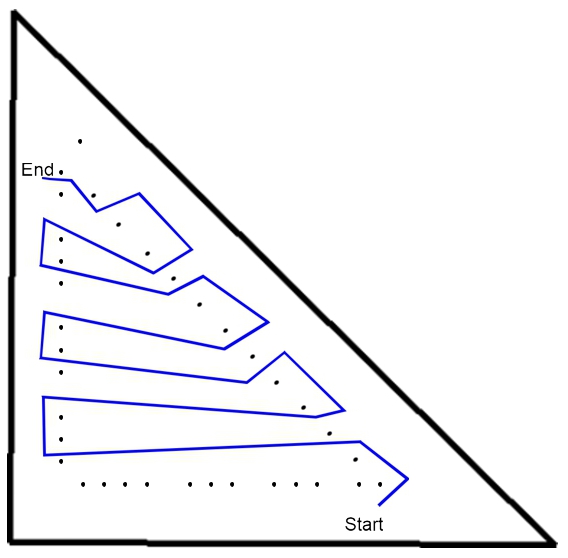
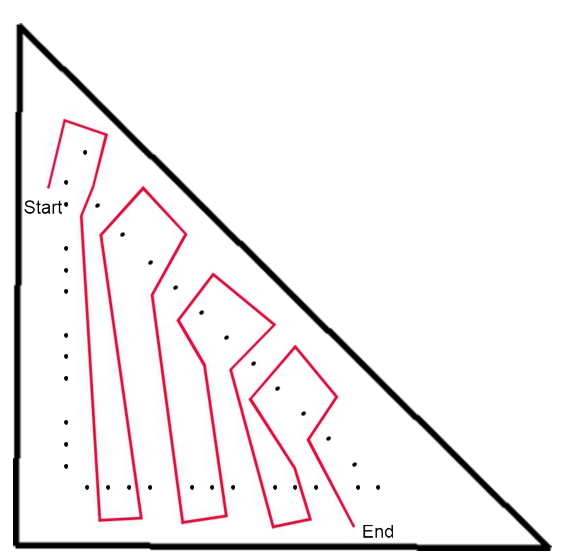
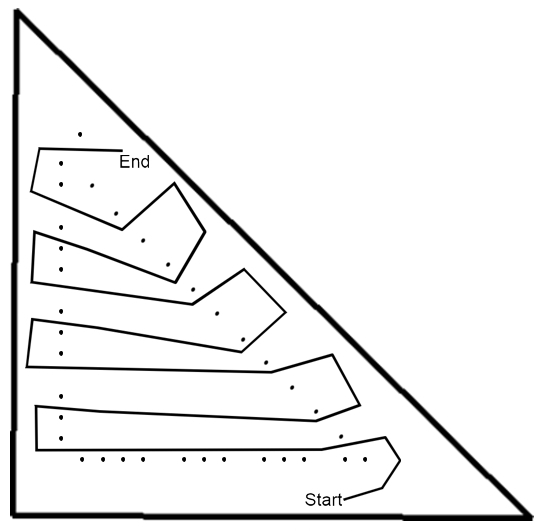
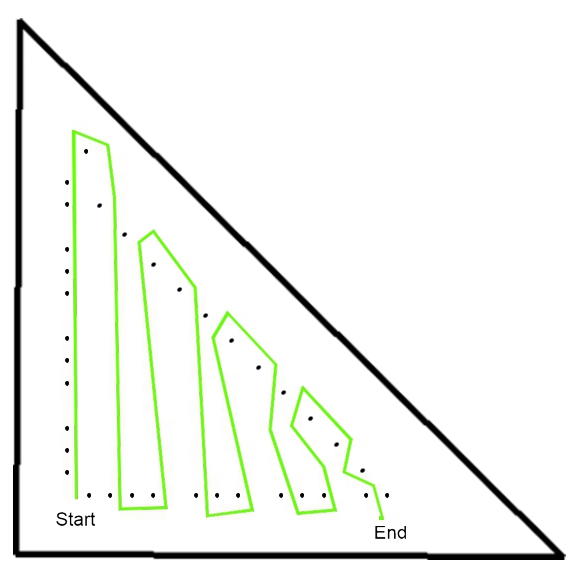
Below are several illustrations for weaving a pin loom triangle. It’s accomplished in 4 layers: 3 warp and 1 weave. The pins on the hypotenuse are evenly spaced which makes weaving the triangle different than the square.

Note about the illustrations: The drawings show lines that are cattywampus, but when you weave them, your strands will be nice and straight.

Note about the pin spacing: our pin loom templates intentionally have the top pin slightly out of alignment for easier weaving. The finished woven triangle will look nice and neat.

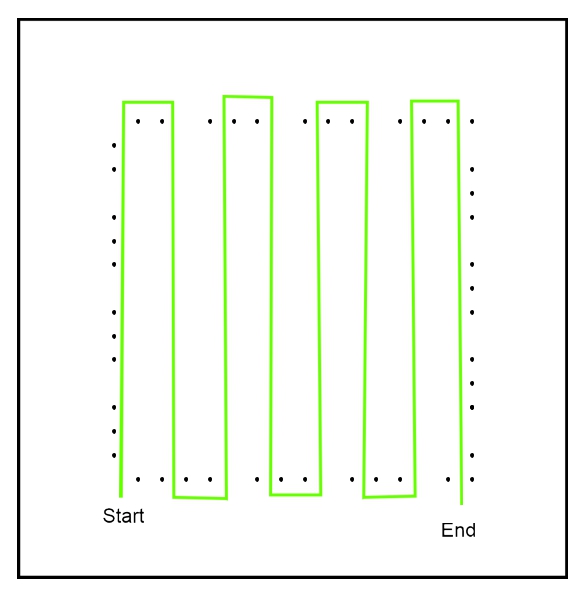
Layer 1: Warp 1 (Illustrated in Green)

Orient the pin loom so the start arrow is in the bottom left corner. The right angle will be the left corner.

  • Hold the yarn at the start (to the left of the 4 pins), bring it up to the top and wrap it right across the first 2 pins.
  • Bring yarn back down to bottom row of pins and between pin 2 and 3.
  • Wrap yarn to the right across 2 pins (pins 3 and 4).
  • Bring yarn back to top. Skip a pin, wrap yarn across next 2 pins.
  • Bring yarn back down, skip a pin, wrap across next to 2 pins.
  • Repeat previous 2 steps across ending with yarn between last 2 pins at bottom right corner.

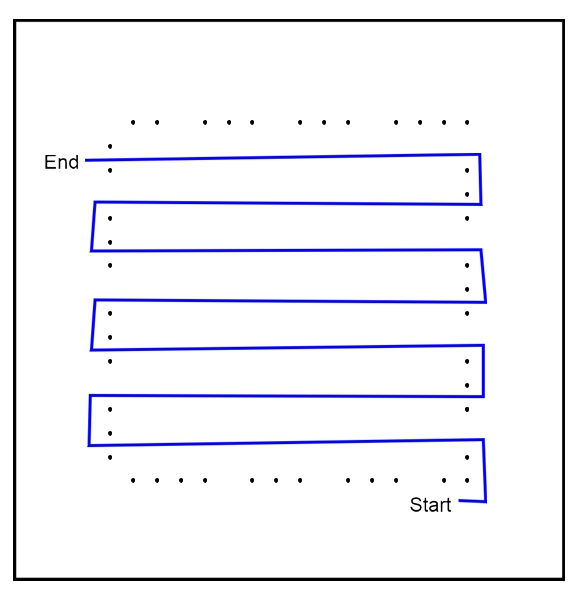
Layer 2: Warp 2 (Illustrated in Blue)

This layer will work right to left. Continue where you left off at warp layer 1.

  • Bring yarn to right side.
  • Bring yarn up and wrap across 2 pins.
  • Bring yarn to left side of loom, skip 1 pin, wrap yarn across next 2 pins.
  • Bring yarn to right side of loom, skip 1 pin, wrap across next 2 pins.
  • Repeat previous 2 steps to the top.
  • Finish by bringing yarn to the left between pin 1 and 2 near the top.

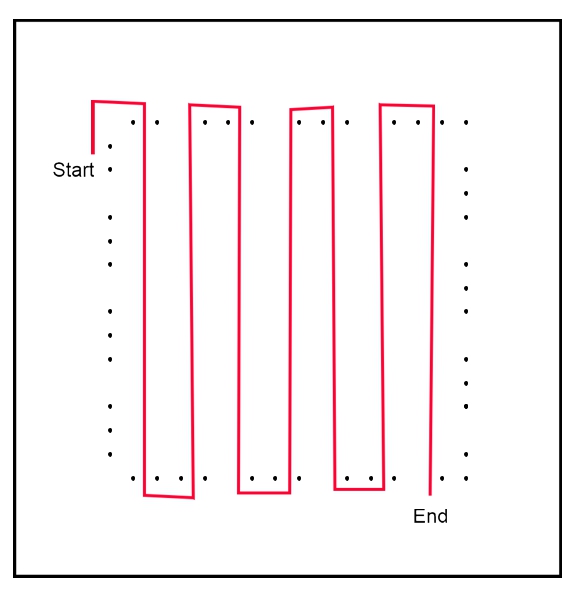
Layer 3: Warp 3 (Illustrated in Red)

This layer will work from top to bottom. Continue from where you left off at warp layer 2.

  • Bring yarn to the top around the 1st pin of the hypotenuse.
  • Bring yarn to bottom, skip the 1st pin, wrap yarn across 2 pins.
  • Bring yarn to top, skip 1 pin, wrap yarn across 2 pins.
  • Bring yarn to bottom, skip 1 pin, wrap yarn across 2 pins.
  • Repeat previous 2 steps across.
  • Finish at the bottom, skip 1 pin, place yarn in gap with 2 pins to the right.

Step 4: Weave (Illustrated in Black)

This layer will be worked right to left. Continue from where you left off at warp layer 3.

  • Before starting this layer, you need to measure out a length of yarn for weaving. Wrap the yarn around the outside of the pins (around all 3 sides) 4 to 6 times. This will give you enough yarn to weave and a little extra for joining shapes together.
  • Cut the yarn after the last wrap, unwrap yarn back to end of last warp, and place yarn on weaving needle.
  • Plain weave is the most common pattern. You will bring needle under a strand, then over the next strand, repeating under/over all the way across.
  • Begin at right side of loom. Look for yarn that wraps across 2 pins, which is the first 2 pins on the bottom right. The needle will always go over the loop (See ***Special Weaving Note below if there are 2 strands at the start of your weaving row).
  • Because you are starting in a corner, it may be challenging to see the different yarns to weave under and over. You can tell which to go under because the strand will be lower/recessed. The strand to weave over will be higher/raised. Weave under/over across.
  • Pull yarn all the way through.
  • Now weave left to right (next is weaving between pins 2 and 3). Place yarn over the strand across the pins and weave as normal: under/over across.
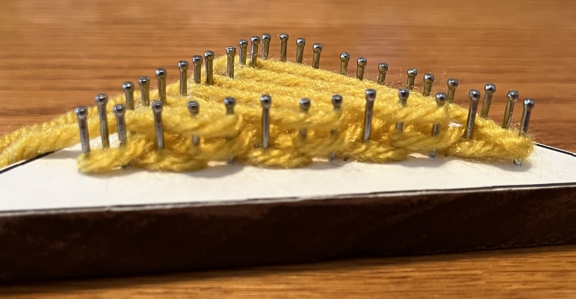
  • ***Special weaving note. The next row is woven right to left and you’ll notice there are 2 strands wrapped around these pins (see photo below). YOU MUST WEAVE THEM INDIVIDUALLY as follows:
    • With weaving needle, push top strand to right, exposing the strand below.
    • Now, put your needle under that second/lower strand. This is your 1st under.
    • Weave the remainder of the row as normal: over/under across.
  • Continue weaving the remainder of the rows under/over across. Note that the hypotenuse side will often have 2 strands wrapped across the pins. Weave them as mentioned above.

Photo shows the hypotenuse side of the triangle where some pins have a double wrap. See ***Special Weaving Note above for how to weave those end strands so your triangle looks nice and tidy on this side.

Yarn Size

Traditional pin looms are designed to be woven with light weight (size 3) and medium worsted weight (size 4) yarns. Since the triangle is a little bit trickier to weave than the square, we recommend that you weave your first triangle with cotton thread. That will allow you to see how all the strands interact with the pins.

Yarn Fiber

The type of yarn you use will also impact how easy you triangle is to weave. Yarns with some elasticity will be easier to weave with because they have some stretch and give.

  • Easier yarns: acrylic, wool and other animal fibers.
  • Difficult yarns: cotton, bamboo and other plant fibers.
  • Learn more in our Selecting Yarn to weave post.

Tips for Weaving

We share 11 Tips for Pin Loom Weaving in another post. It was written with the 4″ square in mind, but the concepts will translate well to weaving a triangle. For instance:

  • We recommend that you leave a long tail so you can joins woven shapes together.
  • After weaving a row, you can beat down the strands with your weaving needle or a dinner fork.
  • You will want to use both hands when you weave the pin loom triangle. One moves the needle while the other moves warp strands aside so you can weave more easily. Sometimes I’ve even used a yarn needle to move strands aside so I can find where to place my weaving needle.

Pin Loom Triangle Patterns

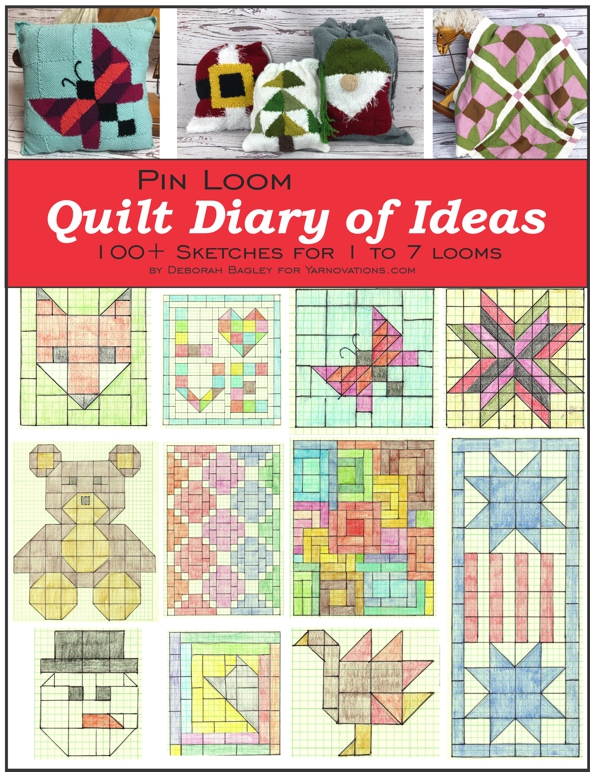
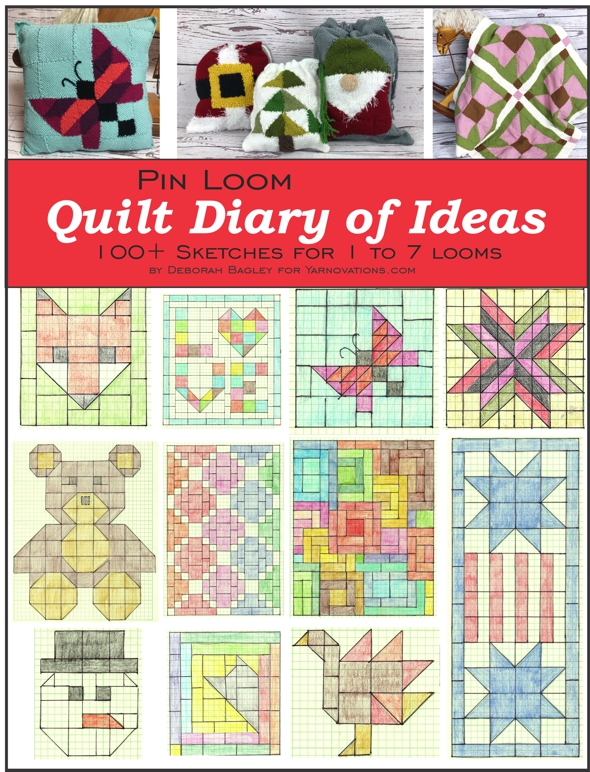
What can you make with pin loom triangles? Lots of things, especially if you combine them with squares (and/or rectangles). One of our favorite patterns is the Quilt Diary of Ideas which has chapters devoted to single shapes and other chapters for multiple shapes.

Check out our YarnovationsShop on Etsy for fun and exciting pin loom patterns.

Can’t find a triangle loom? Build your own pin loom triangles (squares and rectangles, too).

Weave a Pin Loom Square or Rectangle

Pin loom weaving is a lot of fun and quite simple. The 4″ square is the most popular size pin loom to weave and the most readily available. It can be found in lots of independent yarn shops as well as Amazon and Etsy. You can build your own pin loom, too.

Weaving a pin loom square is the same no matter the size. A 2″ is woven in the same manner as the 4″. The 4″ will just have more rows to repeat. Likewise, the 6″ loom will have even more rows to repeat. A rectangle is also woven like a square, it’s just wider.

There are 2 main types of pin looms on the market: 3 pin configuration vs evenly spaced pins. This tutorial shows how to weave a square with a 3 pin configuration.

Weave a Pin Loom Square (or rectangle) VIDEO

Weaving a pin loom square is really easy. Learn how with this short video.

Pin Loom Weaving a Square – Illustrations

Don’t have time to watch the video? Below we have several illustrations for weaving a 2″ pin loom square. It’s accomplished in 4 layers: 3 warp and 1 weave.

Layer 1: Warp 1 (Illustrated in Green)

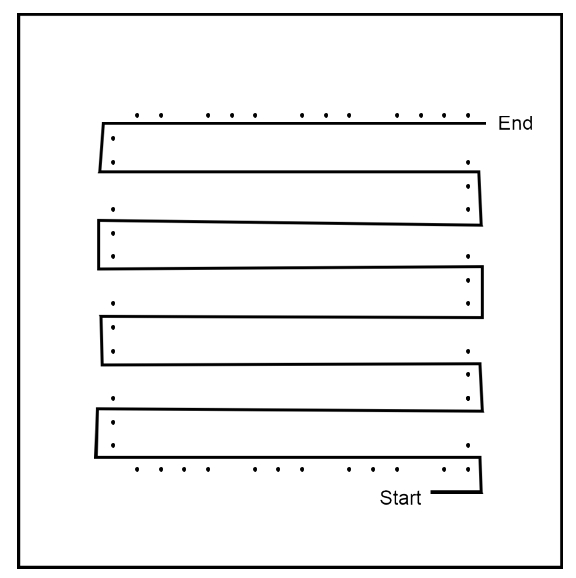
Orient the pin loom so the start arrow is at the bottom left. Most pin looms will have an arrow indicating where weaving should start. In this case, look for a cluster of 4 pins at bottom left corner with no pin at the top left corner. This layer will be worked bottom to top.

  • Hold yarn at start, bring yarn to top row and wrap it across the 2 pins there.
  • Bring yarn back down between pin 2 and 3 and wrap it across pins 3 and 4.
  • Bring yarn back to top, skip 1 pin, wrap it across the next 2 pins.
  • Bring yarn back down to bottom, skip 1 pin, wrap it across the next 2 pins.
  • Repeat previous 2 steps to end.
  • End by bringing yarn back to the bottom between last 2 pins.

Layer 2: Warp 2 (illustrated in Blue)

This layer will work right to left. Continue from where you left off at warp layer 1.

  • Bring yarn to the right side.
  • Bring yarn up and wrap across 2 pins.
  • Bring yarn to left side of loom, skip 1 pin, wrap yarn across next 2 pins.
  • Bring yarn to right side of loom, skip 1 pin, wrap yarn across next 2 pins.
  • Repeat previous 2 steps to top.
  • End on left side between last 2 pins.

Layer 3: Warp 3 (illustrated in Red)

This layer will work from top to bottom. Continue from where you left off at warp layer 2.

  • Bring yarn to top of loom. Wrap it across 1st pin.
  • Bring yarn to bottom of loom. Skip a pin, wrap it across 2 pins.
  • Bring yarn to top of loom. Skip a pin, wrap it across 2 pins.
  • Repeat previous to steps across.
  • End with yarn in the gap to the left of the last 2 pins.

Step 4: Weave (illustrated in Black)

This layer will work left and right. Continue from where you left off at warp layer 3.

  • Before starting this layer, you need to measure out a length of yarn for weaving. Wrap the yarn around the outside of the pins (around all 4 sides) 4 to 6 times. This will give you enough yarn to weave and a little extra for joining shapes together.
  • Cut the yarn after the last wrap, unwrap the yarn back to end of last warp and place yarn on weaving needle.
  • Plain weave is the most common pattern. You will bring needle under a strand, then over the next strand, repeating under, over all the way across.
  • Begin on right side. Look for the yarn that wraps across 2 pins, which is the 1st 2 pins on the bottom right. The yarn always goes over the loop that was wrapped across the pins.
  • Start by weaving the needle under the next strand, then over the next. You can tell which strand to weave under because it will be lower/recessed. The strand to weave over will be higher/raised.
  • Pull yarn needle all the way through.
  • Now weave from left to right (next up is weaving between the 2nd and 3rd pin).
  • Continue weaving back and forth. The last weave will be right next to the pins at the top.

Pin Loom Weaving Tips

Yarn Fiber

Some yarns are easier to weave with than others. Yarns with some elasticity are easier to weave because they can stretch a bit.

Weaving Tension

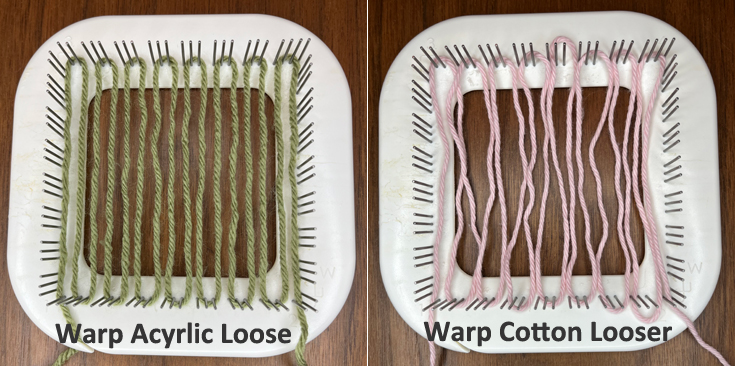
warping pin loom with acrylic vs cotton

When warping the pin loom, wrap with a light touch. Don’t stretch the warp. It will tighten up with each strand you weave. For cotton yarn, warp extra loose.

Tips for Weaving

Read our post 11 Tips for Pin Loom Weaving for more detail. Here are a few of our favorites:

  • Leave a long tail for joining woven shapes together.
  • Pack or beat the yarn after you weave a row. This will leave a gap for weaving the next row. You can use a kitchen fork for this!
  • It’s ok to use both hands to weave. Use one hand to move the needle and the other to move strands in or out of the way for weaving.

Want another take on how to pin loom weave? Schacht spindle company has granted us permission to share their weaving images from the Zoom Loom. Learn more about How to Weave on a Pin Loom.

So what can you make with pin loom woven shapes? Check out our YarnovationsShop on Etsy for some fun ideas.

Make a Pin Loom – Pattern

Pin loom weaving is fun…and even more so if you have looms of various shapes and sizes! There are several small and independent companies that manufacture pin looms. We highly recommend them. However, it can be hard to find pin looms in stores (other than weaving friendly yarn shops).

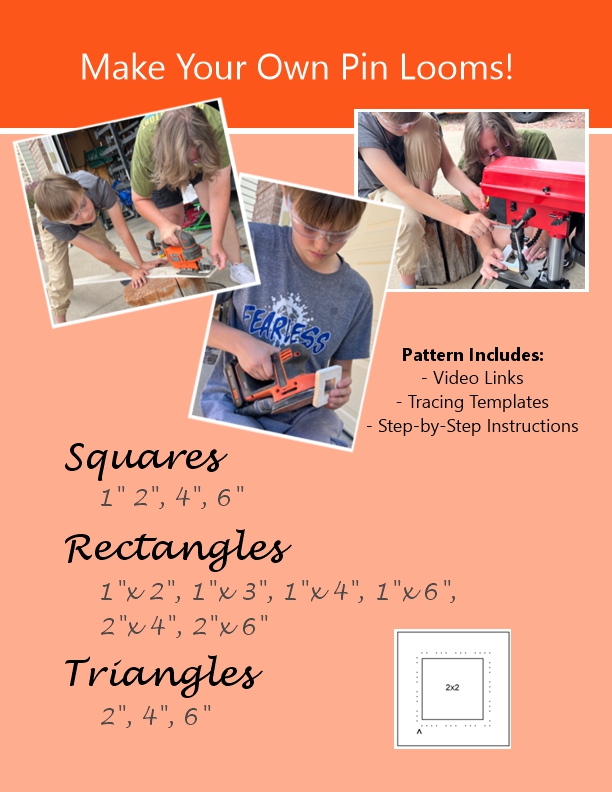
In order to get all the pin loom shapes you might need, you can make your own! This pattern includes pin loom templates for squares, rectangles and triangles measuring 1” up to 6”. Not only can you build your own, we show you how to build them with common household items.

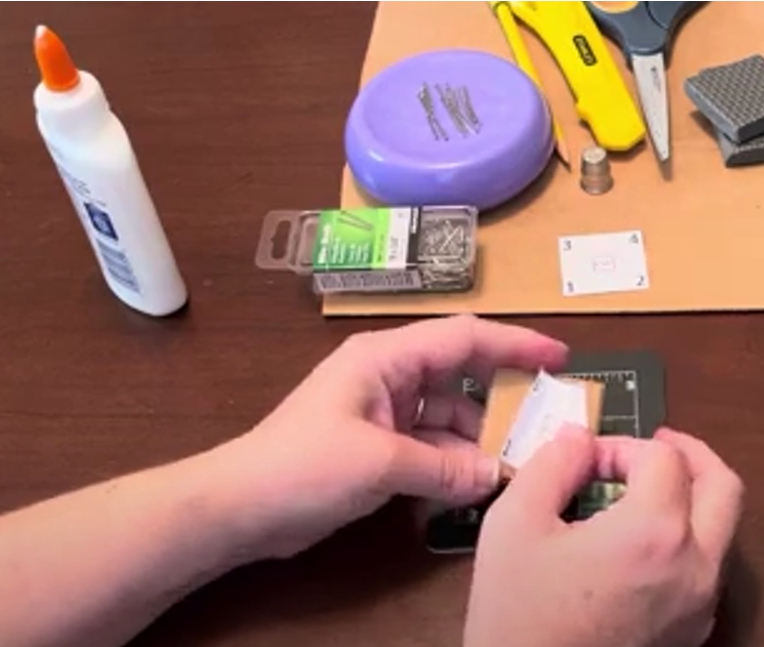
You can make a pin loom from items such as cardboard and straight pins. Those work ok for really small looms like the 1″ square and if used lightly. If you weave regularly or like the larger shapes, we recommend that you build a loom from wood like MDF or plywood and brad nails, all found at your local hardware store.

Build a Pin Loom Step-by-Step

The pattern for Making Your Own Pin Loom is awesome! It answers lots of questions you may have and offers step-by-step information for building a pin loom start to finish:

  • Step-by-Step Written Instructions
  • Tons of Photos
  • VIDEO link to Build a Loom from Cardboard or Foam
  • VIDEO link to Build a Loom from Wood
  • VIDEO link to Weaving a Square (or Rectangle)
  • VIDEO link to Weaving a Triangle
  • Links to Where to Buy Ready Made Pin Looms
  • Templates for Squares: 1″, 2″, 4″, 6″
  • Templates for Rectangles: 1″x2″, 1″x3″, 1″x4″, 1″x6″
  • Templates for Rectangles: 2″x4″, 2″x6″
  • Templates for Triangles: 2″, 4″, 6″
  • Materials List for Building Looms on Cardboard, Foam or Wood

Make a Pin Loom Pattern on Etsy

Buy the pattern with templates to Make Your Own Pin Looms in our Etsy shop.

Available now on Etsy.

Buy the pattern on etsy

Pin Loom Weaving Patterns

Pin looms are great for weaving up little fabric shapes. These shapes can be sewn together to create countless woven projects from coasters to blankets, to stuffed animals and decorations. You can make a ton of adorable projects with a simple square…but the possibilities are limitless with additional pin loom shapes like rectangles and triangles.

Visit our Etsy shop for lots of fun and exciting pin loom patterns to weave!

Pin Loom Flock Pattern

Introducing…The Pin Loom Flock: 9 Adorable Birds to Weave with Squares and Rectangles. Inspired by the Birds of a Feather crochet pattern, we’re excited to bring our most popular birds to the pin loom community.

9 Gorgeous Birds included in the pin loom pattern:

  • Bald Eagle
  • Cardinal
  • Chicken
  • European Robin
  • Red-Winged Blackbird
  • Robin (and a mini Robin)
  • Seagull
  • Turkey
  • Western Tanager

Shhh…I have a secret for you. All these birds can be made from 2 pin looms (the Robin can be made from 1!). We used 3 to 5 different looms to make each bird so there would be less tails to weave in, but you can make them with a 2″ square and 1″x4″ rectangle (with folding of the rectangle in some cases).

Pin looms we used to make all the birds include:

  • Squares: 1″, 2″, 4″, 6″
  • Rectangles: 1″x2″, 1″x4″, 2″x4″, 2″x6″

The Pin Loom Flock on Etsy

The pin loom pattern to make the Pin Loom Flock is available now on Etsy.

Available now on Etsy.

More about The Pin Loom Flock Pattern

The Pin Loom Flock is a beginner friendly pattern. Every square and rectangle will be woven in plain weave and joined with a simple overcast or your favorite join method. The birds measure: 5.5” length x 6.5” width x 4.5” height. The Chicken measures 7.75” x 5.75” x 6” because it has a couple rounds of single crochet (it is the only bird with crochet).

The pattern includes written instructions as well as helpful photos for rolling and folding shapes to make feet, beaks, wattles, snoods and combs. There are helpful charts to show yarn and loom sizes used to make each bird.

Materials needed are minimal and include:

  • Yarn: Size 4 medium worsted weight
    (Pattern used: Lion Brand Heartland and Basic Stitch, acrylic)
  • Pin Looms (see list above)
  • Weaving Needle (6″) and Yarn Needle
  • Stuffing
  • Safety Eyes: 14 mm – 2 each bird (chicken 18 mm)
  • Crochet Hook (chicken only): G/4.0mm

Birds for the Holidays and Special Occasions

The birds are fun to make for bird lovers, but they are also fun for several holidays and other special occasions.

  • Christmas Bird: Cardinal
  • Thanksgiving Bird: Turkey
  • Halloween Bird: Blackbird (made in solid black as a Crow/Raven)
  • Wedding Bird: Make the Robin in white as a Dove.
  • Sports Teams: Cardinals, Eagles, Falcons, Ravens

Make one of these birds as a Thinking of You gift and add a little encouragement note:

  • “Fly high, little bird!”
  • “Trust your wings.”
  • “Sing your song.”

These little birds are fun sitting on a shelf or at your desk.

Get your copy of The Pin Loom Flock in our Etsy shop now.

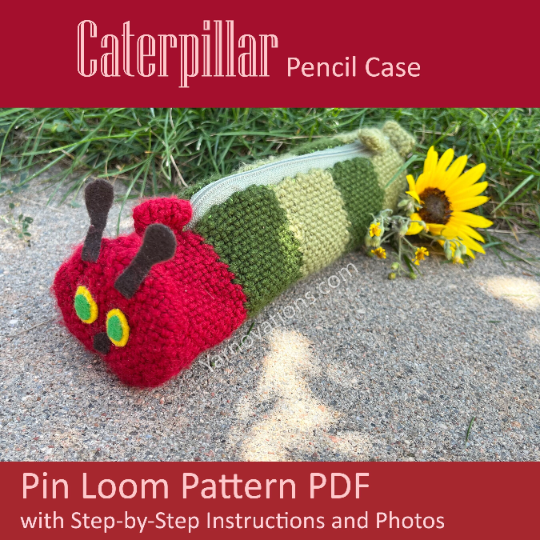
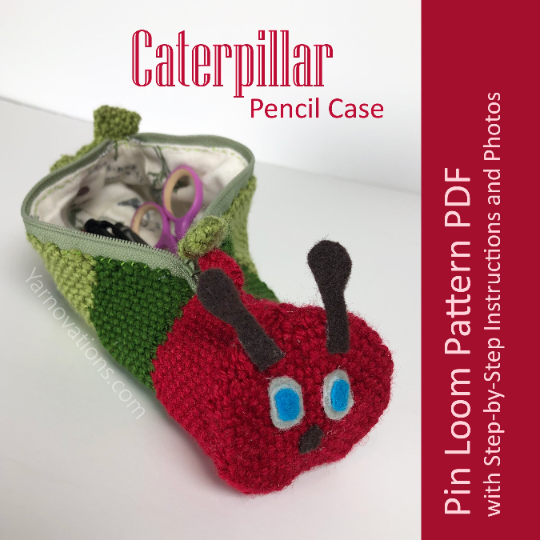
Caterpillar Pencil Case Pin Loom Pattern

Munch, munch…this caterpillar is hungry for pencils, pens and crochet hooks.

It’s easy to pin loom weave your own caterpillar pencil case following this step-by-step tutorial with photos. You need only 2 looms for the woven caterpillar: 2″x4″ rectangle and 4″ square. If you have a 1″ square pin loom, you can add a zipper pull and finger grips on each end of the zipper.

The Caterpillar Pencil Case Pin Loom Pattern includes:

  • Caterpillar
  • Step-by-Step Written Instructions
  • 10+ color photos and charts
  • 7 pages

What you’ll need to make your own caterpillar pencil case:

  • Pin Loom Square: 4” (and 1″ optional)
  • Pin Loom Rectangle: 2”x4”
  • Yarn: Medium Worsted Weight (4)
  • Fabric for Lining: 1 sq. foot
  • Zipper: 8”
  • Felt: remnants for facial features
  • Needle: 6” weaving needle, tapestry needle, sewing needle
  • Thread: to match zipper
  • Washable Marker
  • Fabric Glue
  • Straight Pins

This actias luna caterpillar was originally designed for Little Looms magazine. We have the rights back and it’s now available for purchase on Etsy.

Available now on Etsy: Caterpillar Pencil Case Pin Loom Pattern

Share the Love, Share on Social Media

Pin looming is a small yet vibrant community of weavers. Share this fun project on pinterest, instagram or wherever you browse for pin loom patterns.

Thank you.

Pencil cases are great for more than just back to school. It can be used to hold crochet hooks, sewing notions and even as a small make-up kit. Though not required, we strongly recommend that you line the panel case with fabric. It’s all too easy to snag or poke a hole in the woven shapes. You’ll be much happier with it lined with fabric (a thin cotton works great).

Pick up your copy on Etsy: Caterpillar Pencil Case Pin Loom Pattern.

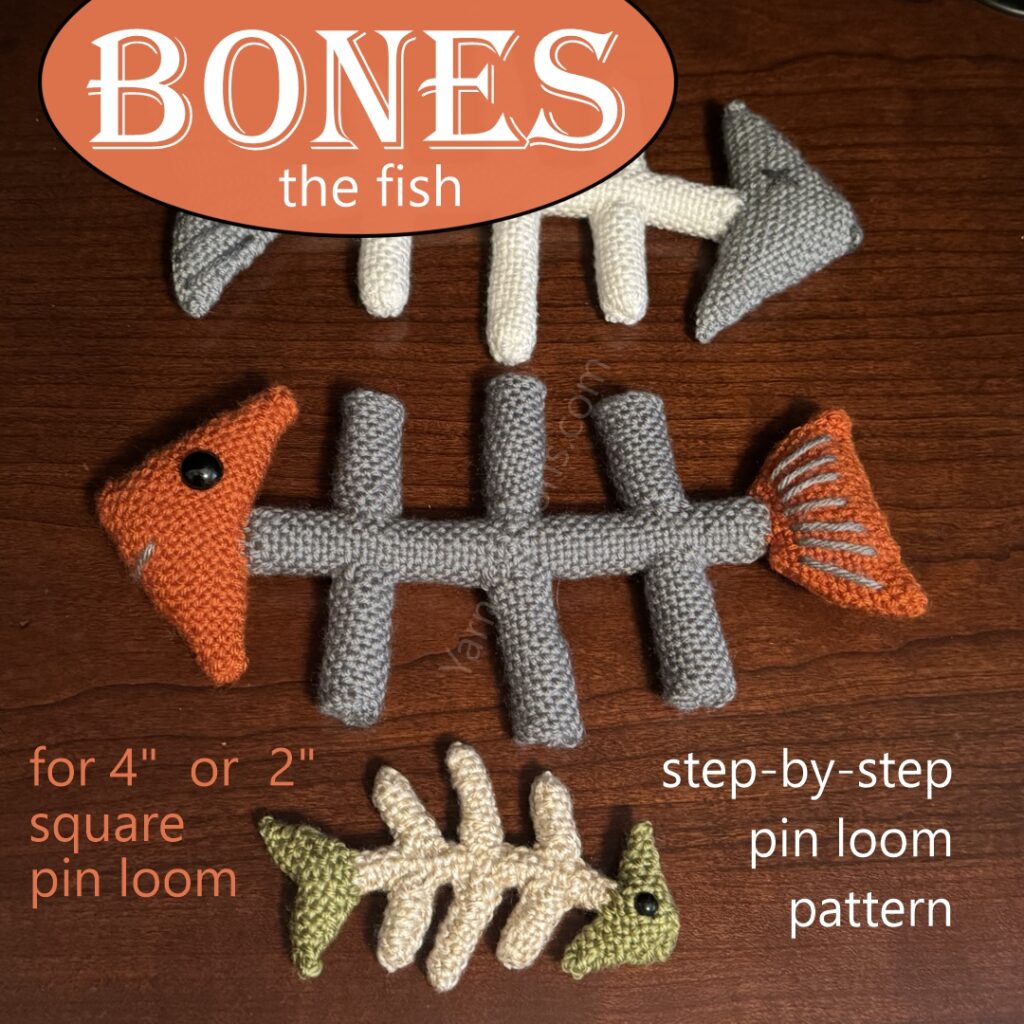
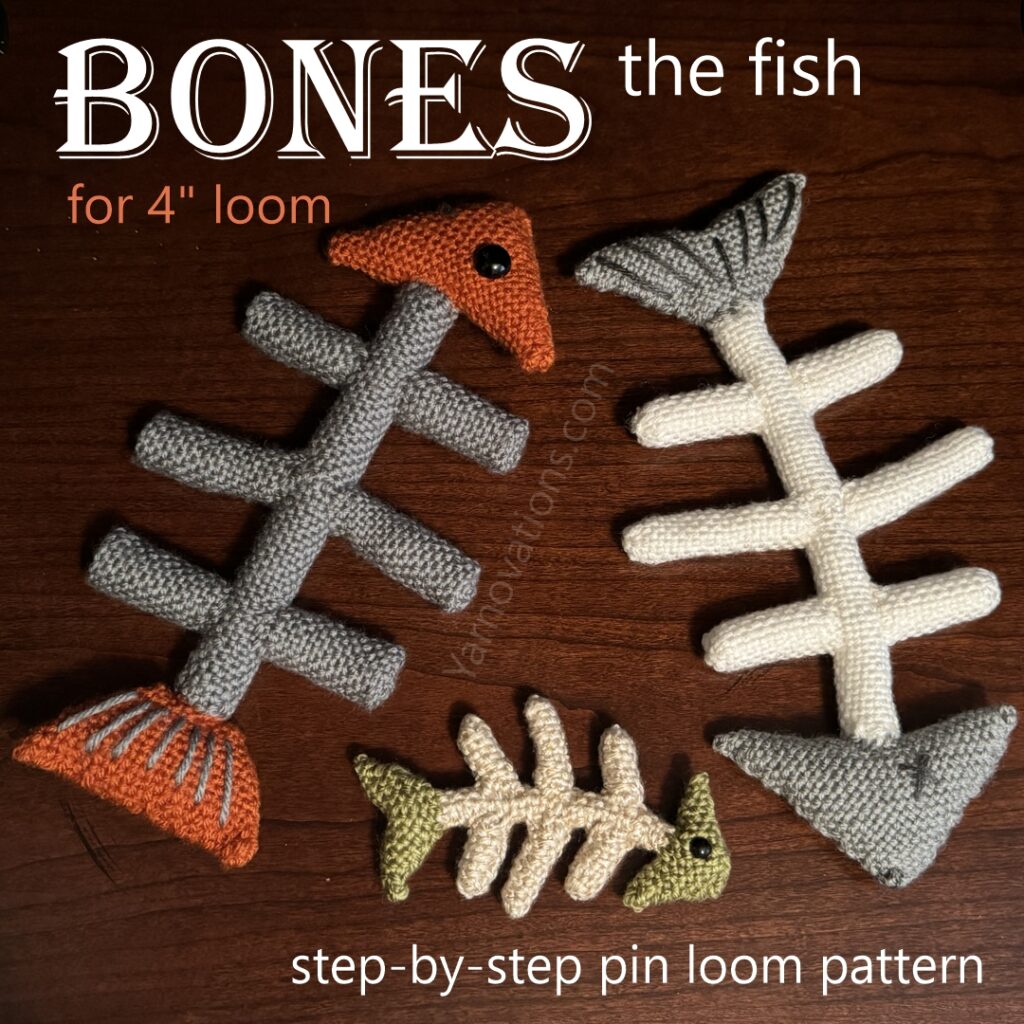
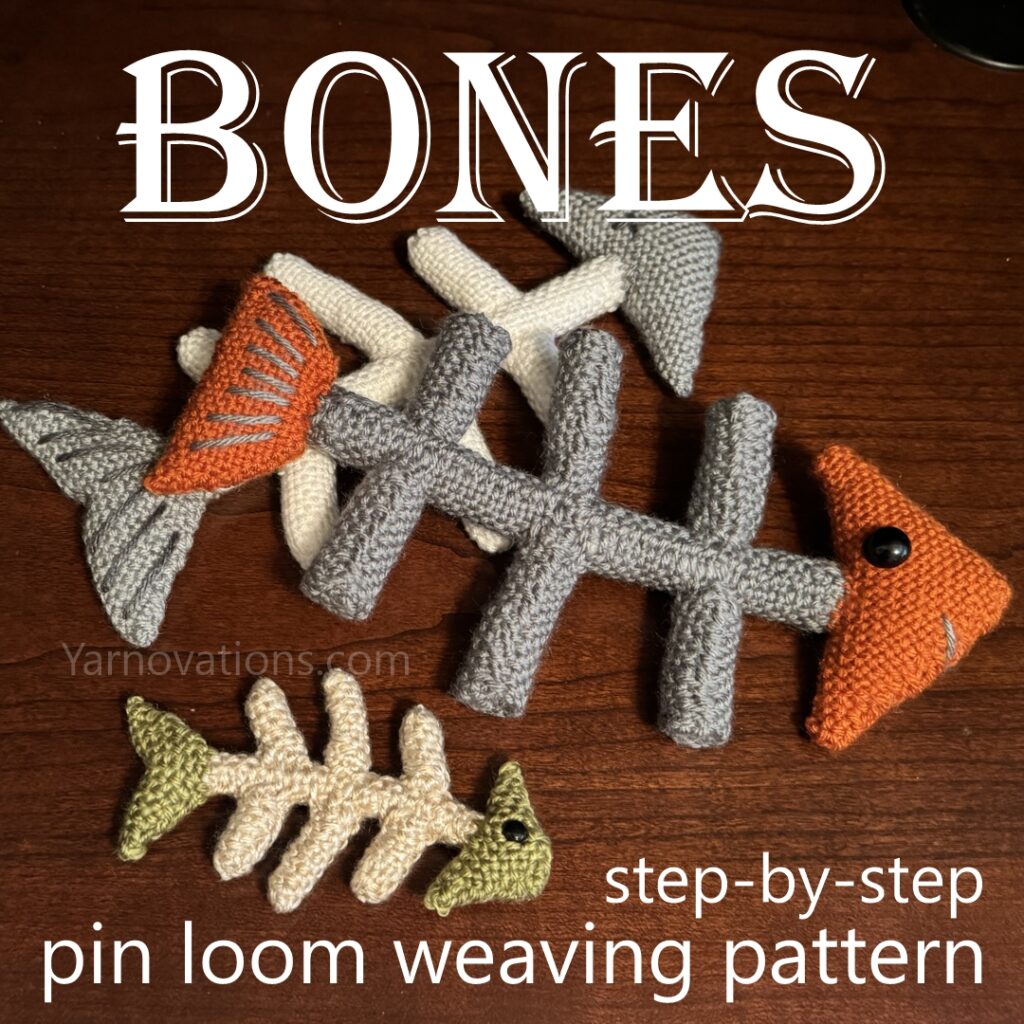
Bones the fish Pin Loom Pattern

Weave your own fish skeleton with pin loom squares!

Bones, the fish, is a stuffed animal made from pin loom squares. Make your own with either a 4″ or 2″ square pin loom. Only 1 pin loom is needed!

Beginner friendly, this pin loom weaving pattern includes step-by-step instructions with photos. It will teach you how to fold, roll and sew together shapes to create a stuffed animal that’s just a little fishy.

Bones, the fish, on Etsy

Bones the fish Pin Loom Pattern is now available in our Etsy shop.

Available now on Etsy.

Buy the pattern on etsy

We’ve owned several fish. Some have lived long healthy lives, others not so long. The orange bone fish skeleton stuffed animal reminds us of those poor little gold fish we won at the county fair when we were little. We were full of excitement and looked forward to caring for them for the rest of our lives! All too soon did we learn that pets live shorter lives than us, and carnival won gold fish lived the shortest!

Share the Love

We’d be thrill to have you share this pin loom pattern on social media. Post one of our pictures to pinterest, facebook, instagram or wherever you love to browse for pin loom projects.

Thank you!

Reviews of our Pin Loom Patterns

We receive lots of 5 star reviews for our patterns. Here’s what a few people have said about our other pin loom patterns:

  • “Great pattern! I’m looking forward to making one…” – Linda
  • “Very well organized pattern. Instructions are easy to follow. Would recommend.” – Elven
  • “Just started! So far easy to understand!” – Rita

Stuffed animals that look like fish bones are really funny and surprisingly fun to gift and decorate with.

  • Add bones to your Halloween decorations. It would be particularly fun next to any other skeletons you decorate with.
  • Add catnip and make it a cat toy (do NOT use safety eyes on toys for animals or babies).
  • Give as a gag gift to friends and family that love to fish.
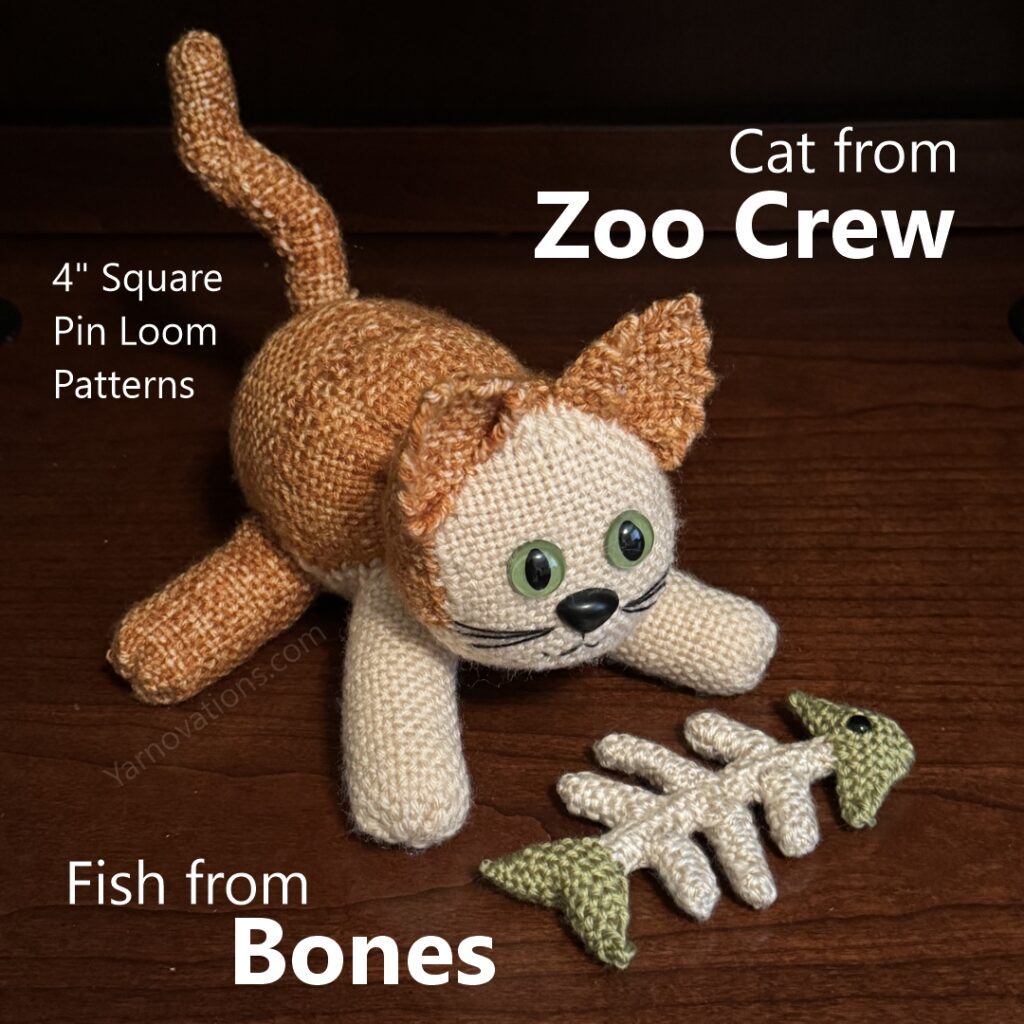
  • Pair this fish with the cat from Zoo Crew (see picture below).

Be a Toy Maker

Be a toy maker! We have lots of stuffed animals you can make with a single square pin loom. Use a 4″ pin loom for traditional sized toys…or for miniatures, use a 2″ square pin loom!

  • Bones the Fish Skeleton – is available as a separate pattern.
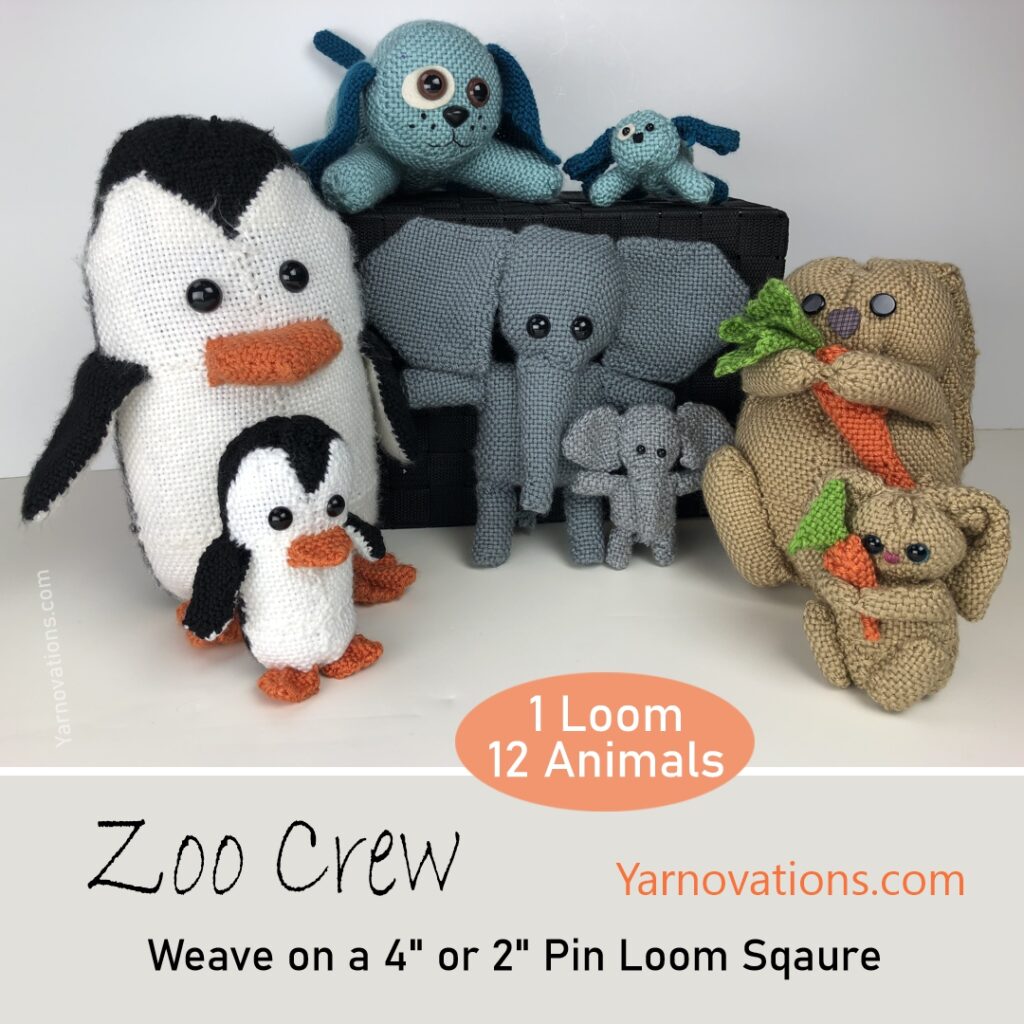
  • Ginny the Cat – is available in Zoo Crew ebook which features 12 loveable stuffed animals.
Zoo Crew ebook 12 animals to pin loom weave on 4" or 2" pin loom. Pictured with penguins, dogs, elephants, bunny rabbits.

Which little fishy will you make?

Get Bones, the fish, Pin Loom Pattern on Etsy.

Scrubby Yarn Tips & Tricks for Pin Loom Weaving

Tips and tricks are definitely needed if you plan to weave with scrubby yarn. It makes the BEST dishcloths for handwashing dishes but the yarn is definitely aggravating to work with. We’ve made lots of variations of an 8″ dishcloth and learned a thing or two…and maybe said a colorful word or two, as well.

How to weave scrubby yarn without pulling all your hair out!!

Scrubby yarn makes wonderful woven dishcloths that are pliable and durable. Made from polyester, this yarn has lots of little tendrils sticking out which give it an abrasive quality, without actually being abrasive. The rough texture makes it great for washing dishes, but a challenge for weaving on a pin loom using multiple warp layers, like the looms with a 3-pin configuration. Not only do all the little tendrils make it difficult to see each warp strand around which to weave, the needle invariably snags a tendril making it nearly impossible to pull the needle through each layer.

After weaving quite a few Scrubby squares, we found a few tricks to make weaving with this yarn a little less frustrating (though not completely fool-proof)!

Pin Loom Weaving with Scrubby Yarn Tip 1:

Push nearby warp strands out of the way as you weave to isolate the strand around which you are weaving. This helps you find the warp strands you want, as the tendrils often make it difficult to see the different strands. By pushing neighboring warp strands out of the way, you are also less likely to snag a stray tendril.

Pin Loom Weaving with Scrubby Yarn Tip 2:

Exaggerate the up and down of the needle. Make the needle go very high when weaving over, and very low when weaving under to try to go over the tendrils.

Pin Loom Weaving with Scrubby Yarn Tip 3:

Pull out a weft row. Unfortunately, you won’t know that you have snagged a tendril or split a warp strand until you start to pull the needle through. And you won’t know where the problem is until the eye of the needle gets to the problem. With extreme care, you can attempt to pull the weft from the needle and pull the row out from the side, but this will be a tiresome task.

Pin Loom Weaving with Scrubby Yarn Tip 4:

Hulk out! More than one square was made with me losing my cool. After much careful but (quite) forceful tugging, I’ve managed to force the needle to pass through the row. More often than not, this has ended up in some tendril pulling and breaking. Surprisingly, the square holds up. It doesn’t unravel and can still be used.

Pin Loom Weaving with Scrubby Yarn Tip 5:

Use the continuous strand weaving method. This method uses a hook, and creates the warp and weft as you go. No more piercing or splitting a strand or tendril with a needle, unless the pin loom shape you are weaving also has a plain weave section, like a hexagon.

Pin Loom Weaving with Scrubby Yarn Tip 6:

Weave with cotton and scrubby yarn in different layers. This is probably the best way to weave scrubby, or at least the least frustrating way!

Hip to Be Square Pin Loom Pattern

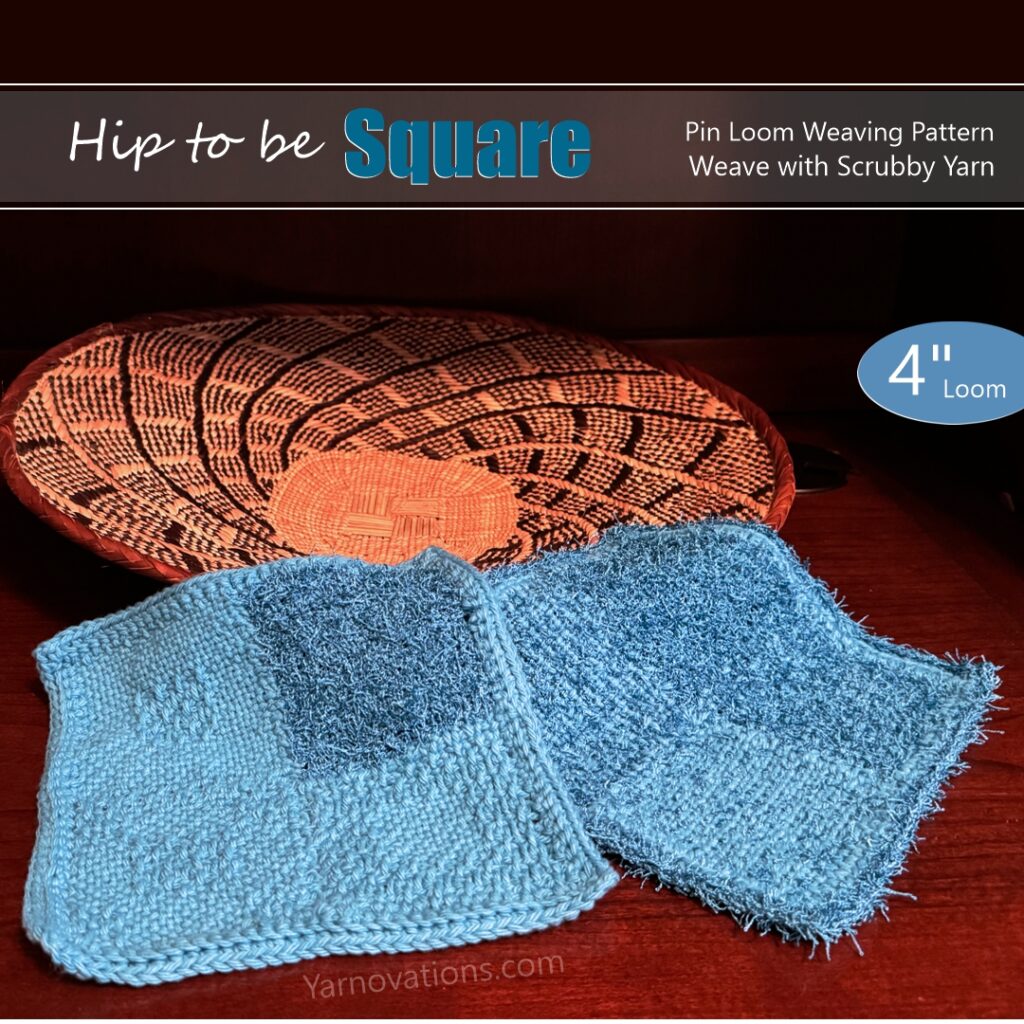
We love gifting dishcloths woven in cotton and scrubby yarn and created a super fun design using a 4″ square pin loom. We call it, “Hip to be Square” because there are 3 embossed square weaving designs along with a scrubby square. This 4″ pin loom square pattern includes all the tips listed here and more!

Hip to be Square pattern includes:

  • Hip to Be Square Dishcloth Pattern
  • 3 Embossed Squares Weaving Patterns
  • 6 Variations on cotton / scrubby dishcloths
  • 6 Weaving Tips
  • 3 Finishing Tips
  • Comparison of crochet vs weaving with scrubby

Hip to Be Square on Etsy

The Hip to Be Square Dishcloth Pin Loom Pattern is available in our Etsy shop. It includes all the tips, tricks and weaving variations.

Available now on Etsy.

More about Hip to Be Square Pin Loom Dischloth

One of the great features of pin loom weaving dishcloths is that the supplies needed are minimal and with only 2 balls of you yarn, you can made several dishcloths! And even better than that…you only need one pin loom, a 4″ square. Here’s what you’ll need to make this giftable dishie:

  • Yarn:         Lily: Sugar’n Cream – 100% cotton, Medium (4) – 1 skein
  • Red Heart: Scrubby – 100% polyester, Medium (4) – 1 skein
  • Pin Loom: 4” square
  • Needle:     6” weaving needle, yarn needle for sewing
  • Crochet Hook: G/6/4.00mm (optional)

This dishcloth first appeared in Little Looms magazine. We have the rights back to this project and have created a pattern packed full of more tips and tricks. Get your Hip to Be Square Pin Loom Pattern on Etsy.

Make a Shark!

Great for Shark Week or any week! We have 3 fun and creative stuffed animals you can weave and sew. These include step-by-step instructions, so anyone can make them.

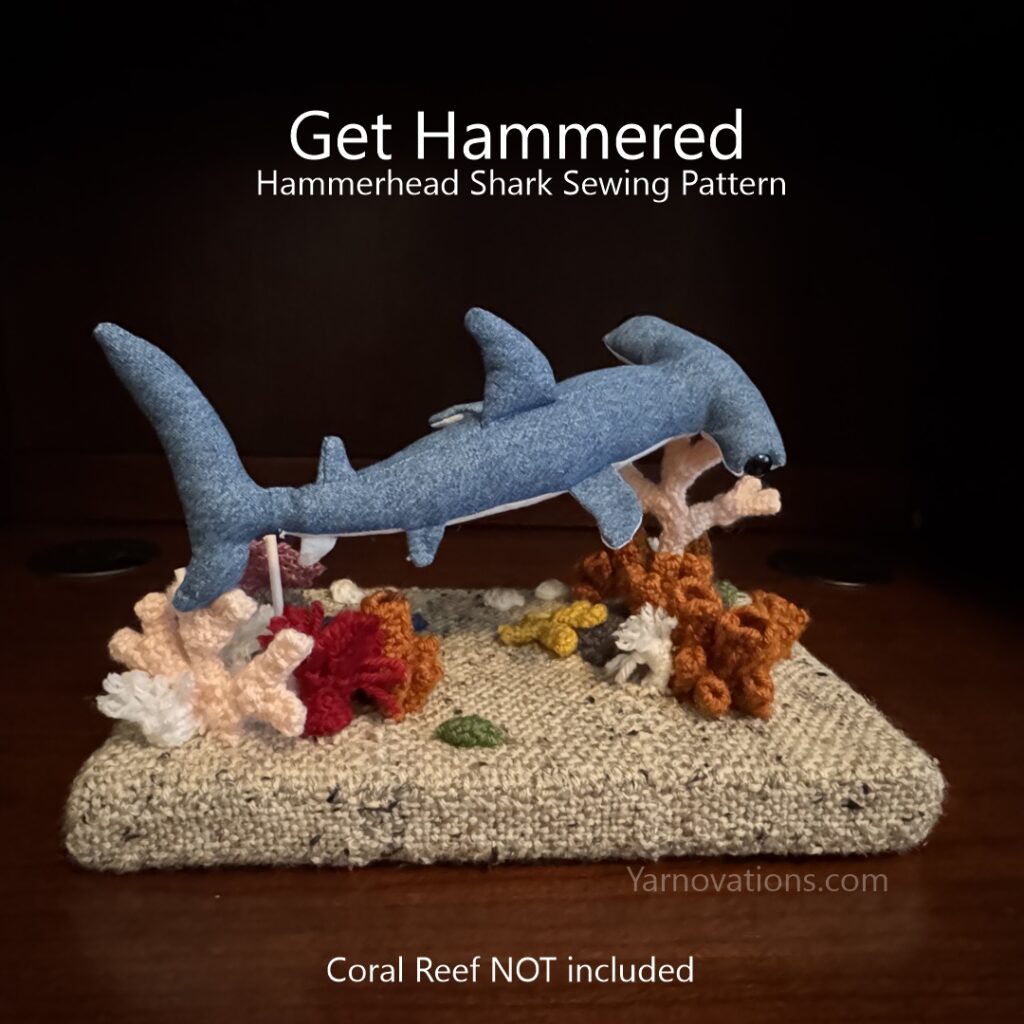
1. Get Hammered: Hammerhead Shark Sewing Pattern

Hammerhead shark sewing pattern with step by step instructions

This Hammerhead Shark sewing pattern is a great pattern for new sewists. It includes step-by-step written instructions, lots of photos and tracing templates. The coral reef pictured is not included. It was woven on pin looms.

The sewn hammerhead shark measures approximately 18″ long. If you love upcycling, this is a great project for that. What makes this hammerhead shark sewing pattern so realistic is the inclusion of all 8 fins and the notch on the caudal (tail) fin.

Hammerhead Shark sewing pattern is now available on Etsy.

2. Nailed It: Hammerhead Shark Pin Loom Weaving Pattern

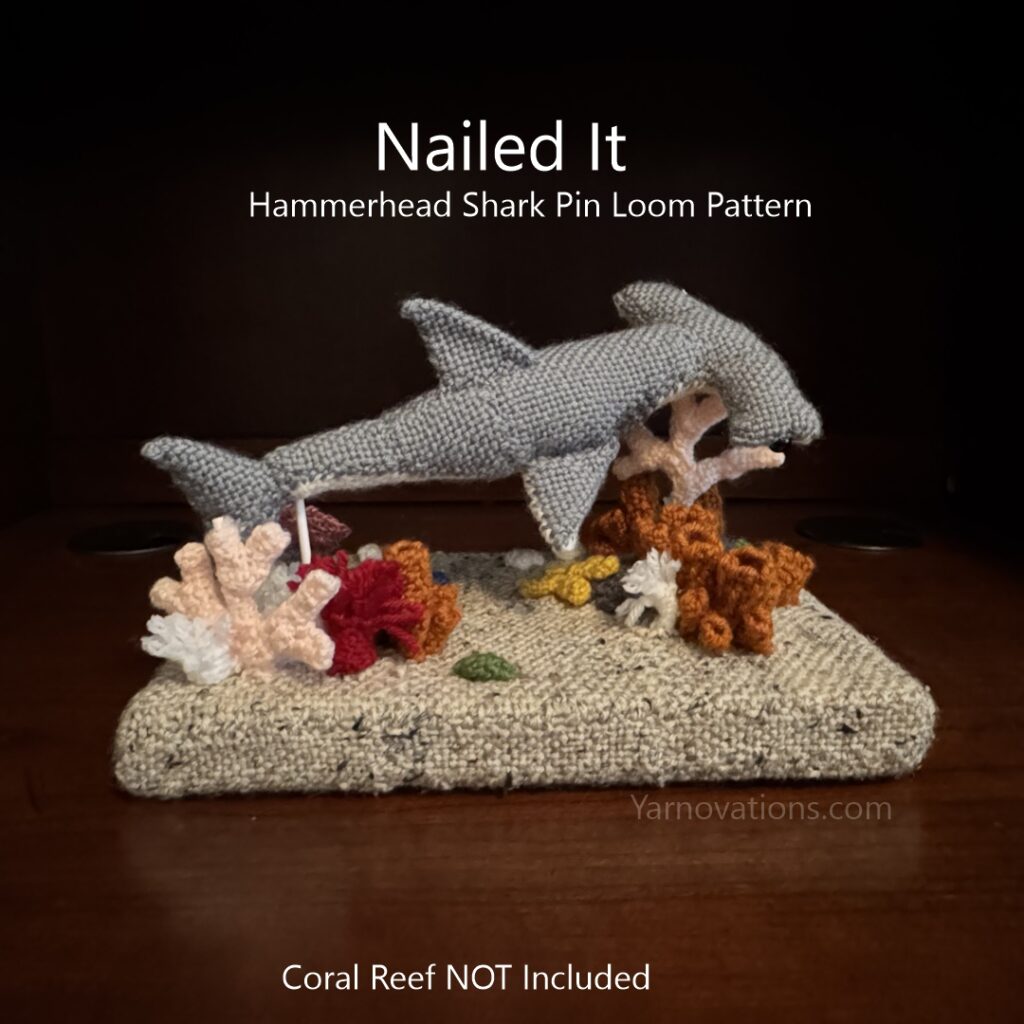
You’ll be saying, “Nailed It” after weaving your own hammerhead shark. This shark stuffed animal is created with pin loom shapes that are folded or tucked and sewn together. The hammerhead shark pin loom pattern includes step-by-step written instructions and lots of photos, so even the beginner weaver can make one.

The pin loom hammerhead shark measures approximately 10″ long. Each pin loom shape is woven in plain weave making it a very approachable project.

The Hammerhead Shark Pin Loom Pattern is now available on Etsy.

3. Shark Attack: Gnome Pin Loom Weaving Pattern

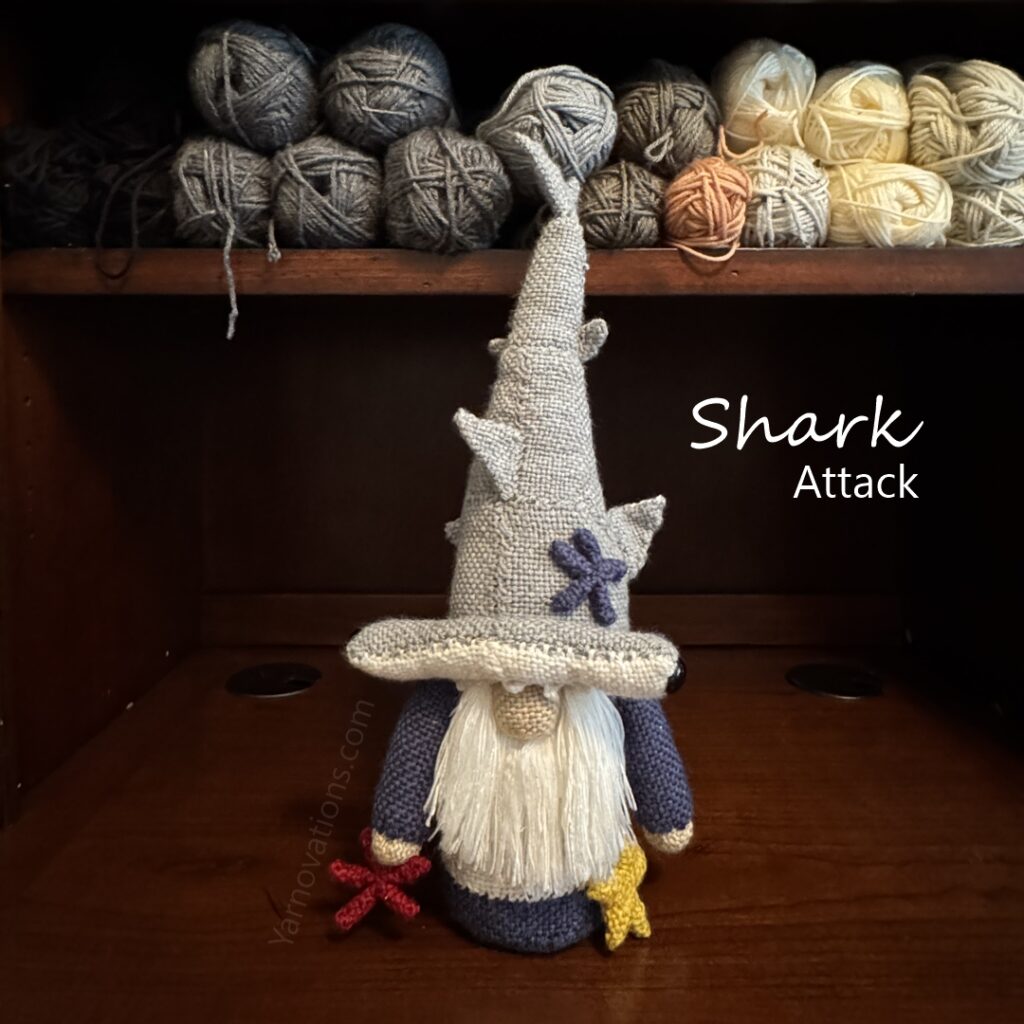
Ready for a day at the beach, this gnome’s hat looks like a Shark Attack! The gnome, shark and even the starfish are made from pin loom woven shapes. This pin loom pattern also includes step-by-step written instructions and lots of photos.

Shark Attack Gnome measures approximately 18″ tall from bottom of gnome to the end of the shark tail. The gnome, shark and starfish are all woven on pin looms in plain weave. The teeth are crocheted.

Shark Attack Pin Loom Pattern is now available on Etsy.

All three of these Hammerhead Shark patterns are a lot of fun to make and to play with.

Enjoy!

Panda Gnome-ium

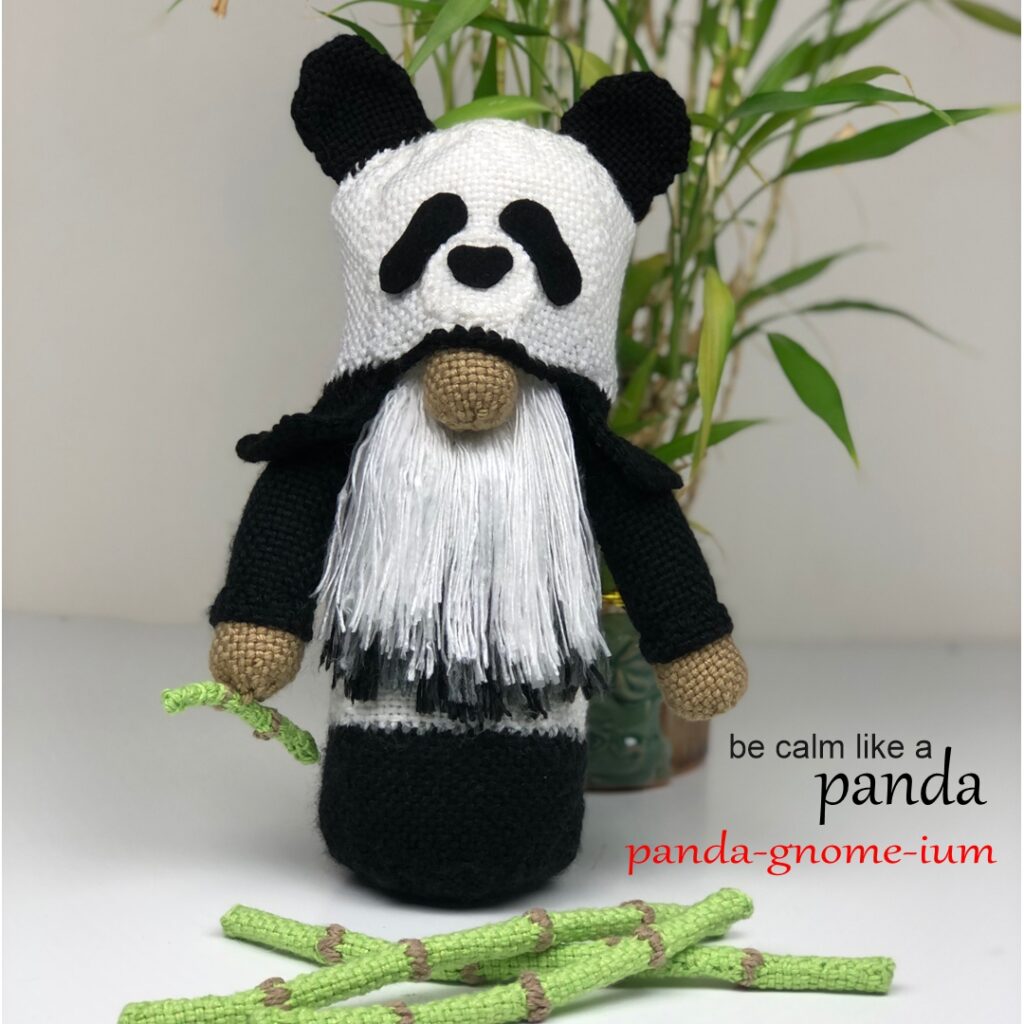
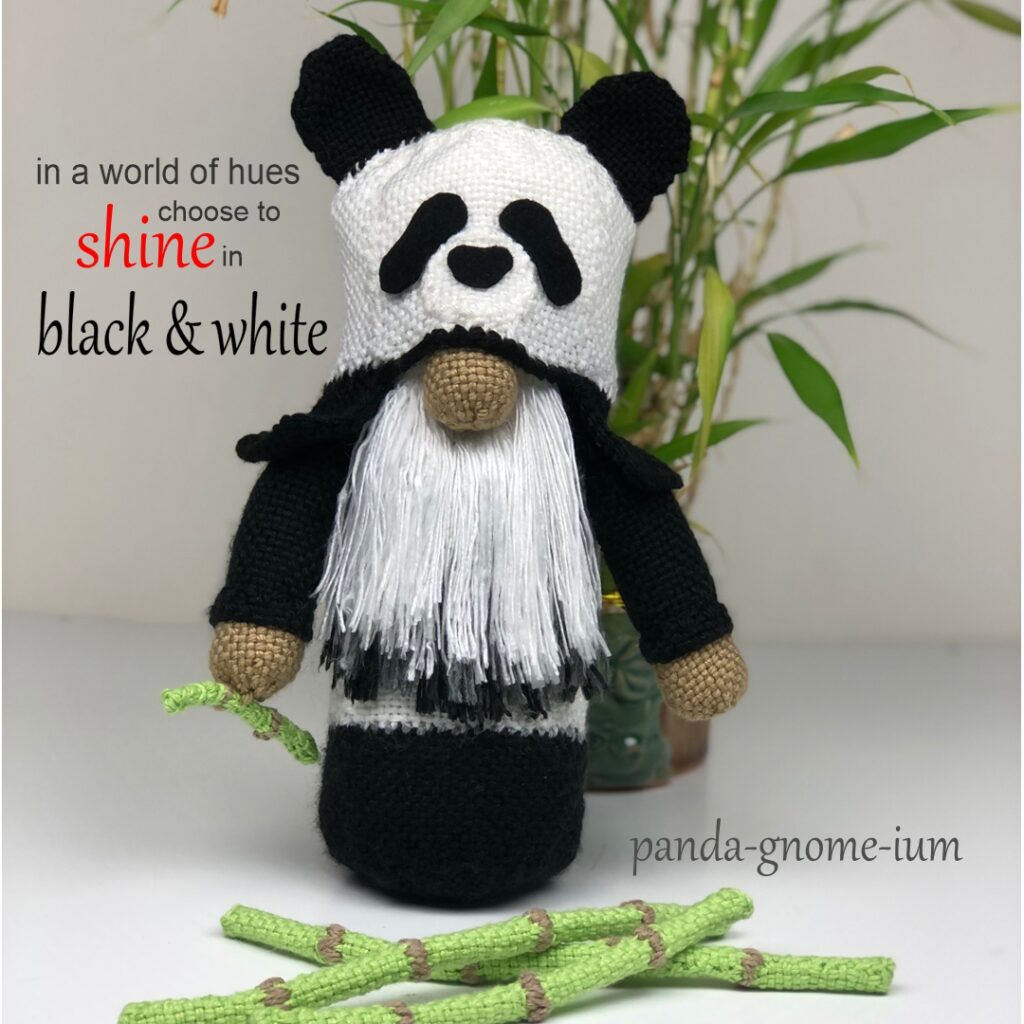
This gnome loves pandas! The cool weather of fall is his favorite time of year because he can put on his panda hat and munch on bamboo.

Weave your own panda loving gnome with this step-by-step pin loom pattern pdf Panda-Gnome-ium download. The tutorial includes the gnome, panda hat and bamboo! The pattern has written instructions for each step telling you how to roll, fold, tuck and sew pin loom shapes into a panda gnome plush toy.

Panda-Gnome-ium Pattern PDF

Whether you’re new to pin loom weaving or have been weaving a while, this pattern will make it easy to recreate a panda gnome stuffed animal just like the one pictured. Here’s what’s included in the pattern:

  • Gnome Instructions
  • Panda Hat Instructions
  • Bamboo Instructions
  • Step by Step Written Instructions
  • 30+ Photos
  • 13 Pages

Reviews for Our Pin Loom Patterns

This Panda Gnome is fun and easy to make following the PDF pattern. Don’t just take our word for it. Here’s what others are saying about our pin loom patterns:

  • Super explained, cute, everything done well. – Steffi
  • Fun pattern. Matches description. Fast download. – Kim
  • Well written pattern nicely illustrated with good photos showing any tricky parts. – Windspinner

Panda-Gnome-ium Available on Etsy

Get your copy of Panda-Gnome-ium Pin Loom Pattern in our Etsy Shop.

Available now on Etsy: Panda-Gnome-ium Pin Loom Pattern.

Buy the pattern on etsy

Pin Panda-Gnome-ium to Pinterest

Share the love, pin one of these panda gnome images to pinterest.

We appreciate it so much. Thank you.

Materials Needed to Make a Panda-Gnome-ium

The supplies list to make a panda gnome is pretty short. In fact, it only takes 3 pin looms to make your own soft toy panda gnome: 4″ square, 2″ square, and 2″x4″ rectangle. Here’s the complete list of what you’ll need to make your own Panda-Gnome-ium:

  • Pin Loom Squares: 4”, 2”
  • Pin Loom Rectangles:  2” x 4”
  • Yarn:   Lion Brand: Basic Stitch – Medium Worsted Weight (4)
    • BLACK #153 – 70 yds
    • WHITE #100 – 125 yds
    • ALMOND #121L – 20 yds
    • GRASS #130B – 35 yds
    • CHARCOAL HEATHER #403J – 10 yds
  • Needle:  6” needle for weaving and yarn needle for sewing
  • Crochet hook: G/6/4.00mm (optional)
  • Stuffing
  • Black Felt: 2 ½” x 4”
  • Fabric Glue
  • Beans: to weigh the gnome down
  • Fabric Marker: – white
  • Pet comb: – metal
  • Steamer (optional)

Pandas in Real Life

Did you know…

  • Giant pandas are a type of bear found in China.
  • Pandas are easily identifiable by their distinct black and white coloration.
  • Pandas are roughly 4-6 feet long, weighing 220 to 250 pounds.
  • Pandas have thumbs on their forepaws to help them hold bamboo.
  • Pandas eat 20-30 pounds of bamboo shoots a day.
  • In 2016, the giant panda was moved from the endangered list to the vulnerable list.

Make a Pin Loom Weaving Panda Gnome

It’s fun and easy to make your own Panda Gnome. Instantly download the Pattern PDF on Etsy.

Available now on Etsy: Panda-Gnome-ium pin loom pattern.

Buy the pattern on etsy