Archives for April 2025

Rag Quilt – Creating Squares

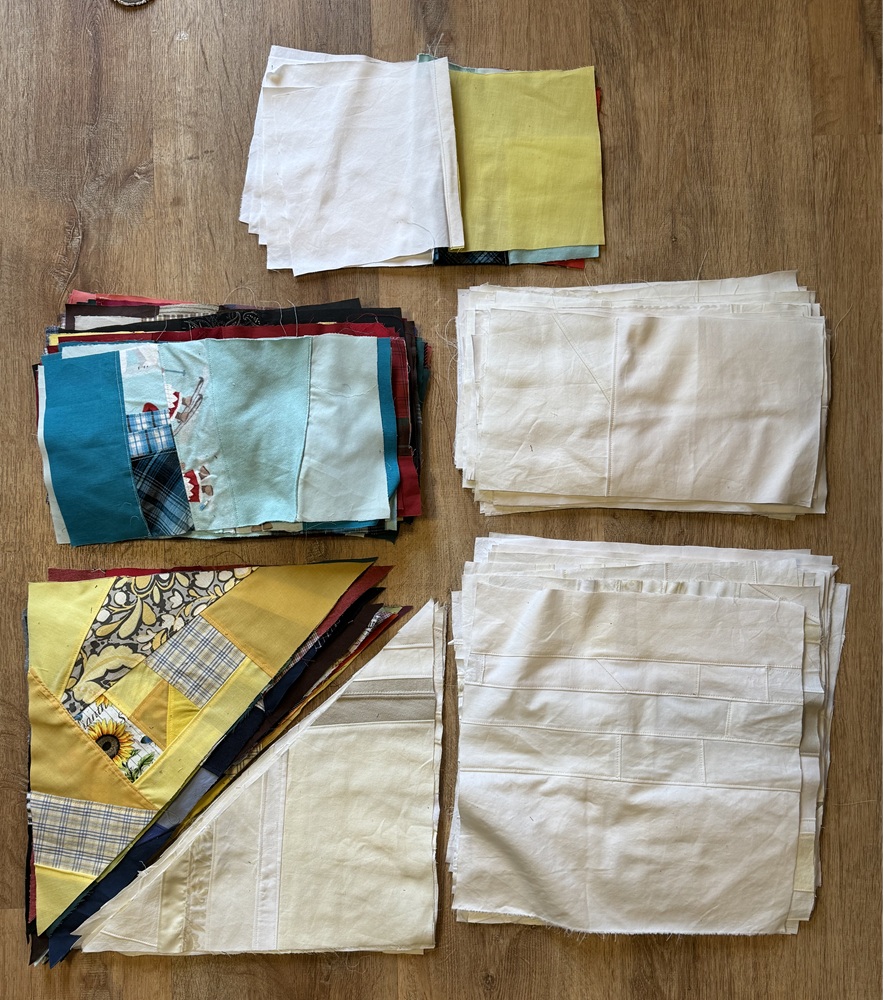
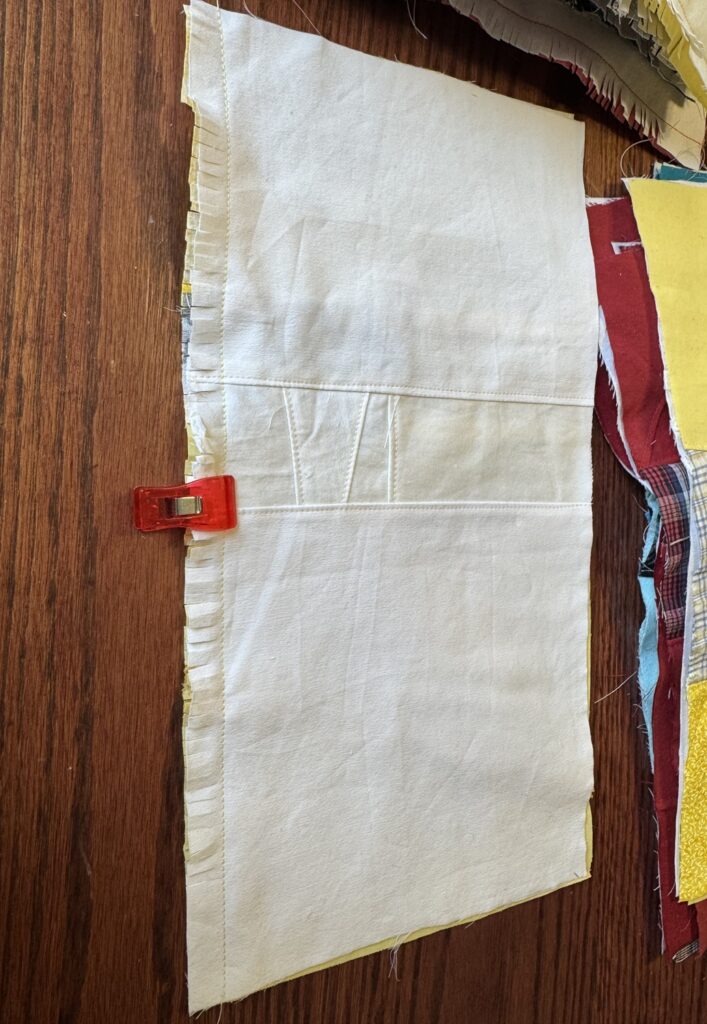
Part 2: After making a plan and creating colorful scrap triangles and rectangles, I sewed the triangles and rectangles together to make squares. The pieces were sewn together with the wrong side facing so the seam would be on the front to be ragged. I cut the seam with little slits about 1/8″ apart. I cut very close to the seam stitches. Once in awhile, I accidentally cut the stitches. I put a sewing clip on the cut section to remind myself to sew that area together as I sewed the large “X’s”.
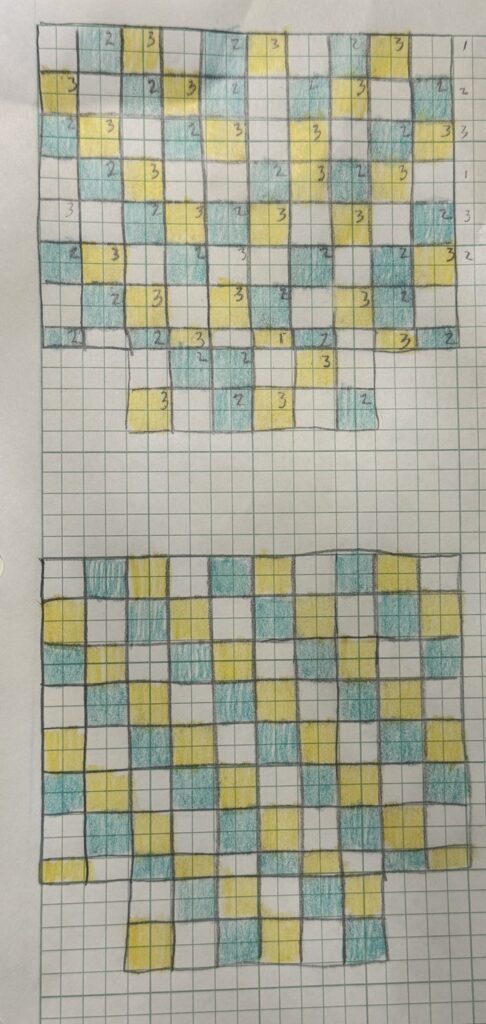
Next, I began working on the second major part of the scrap rag quilt, deciding on the bottom fabric and layout, and cutting the center layer. I chose three colors of cotton for the bottom layer, and a random pattern. I sketched it out so I could place the colors in the correct place.
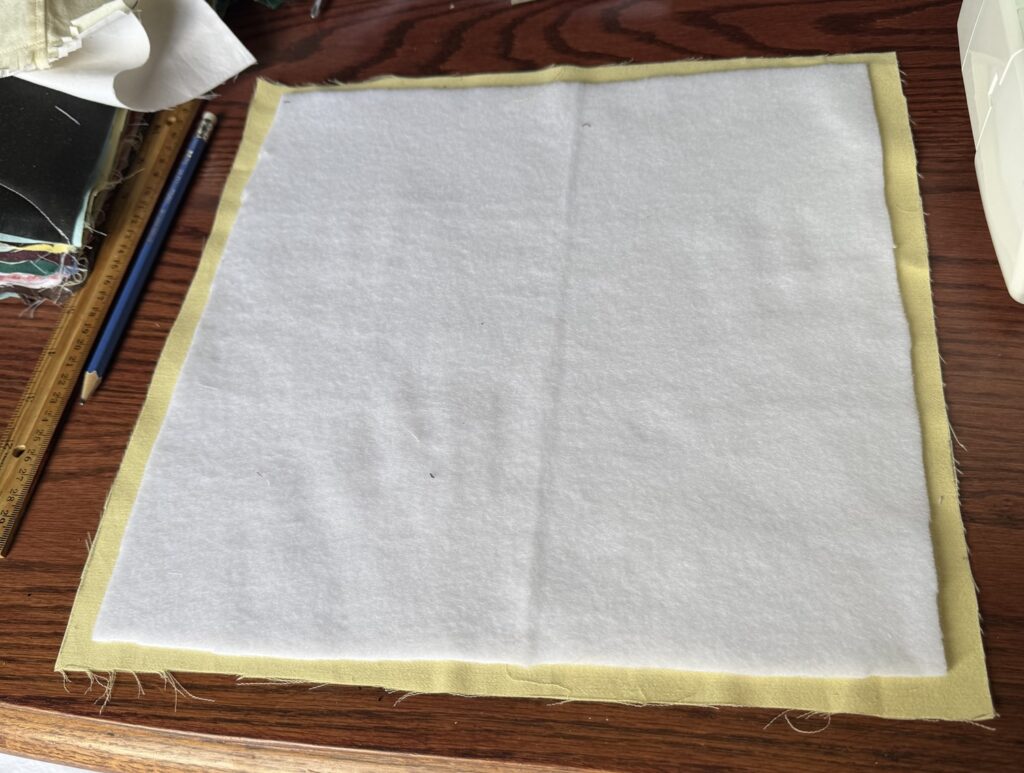
I decided on fleece for the center as an inlay. I cut the fleece squares to 12″. This meant there wouldn’t be fleece in the ragged seam.
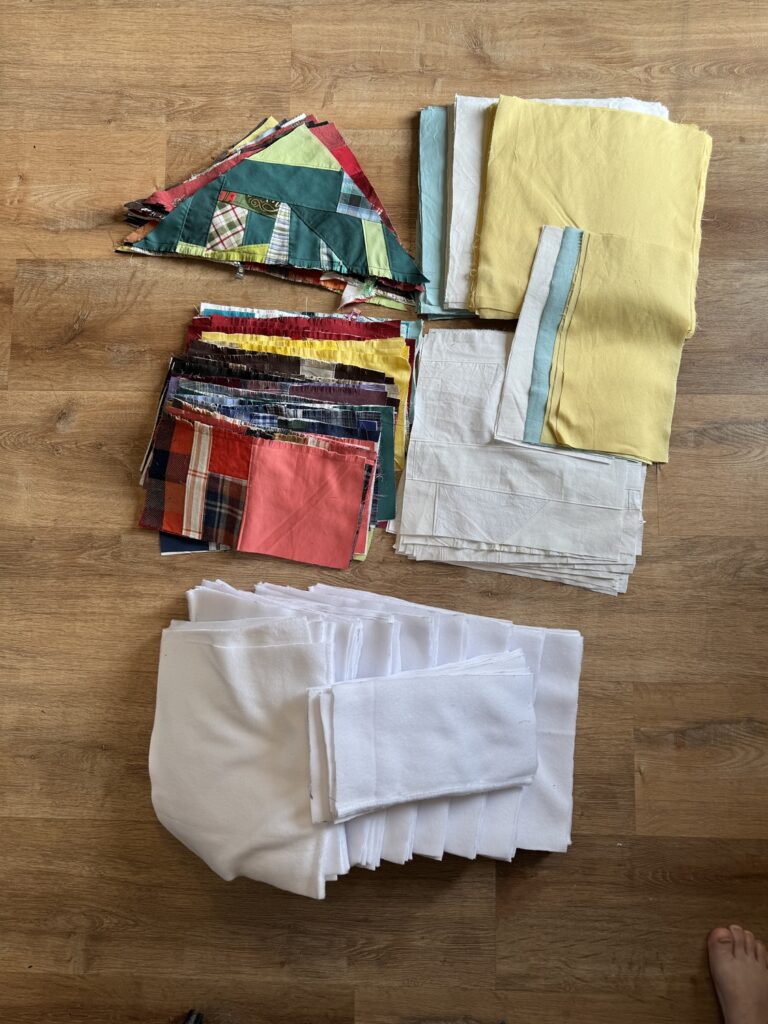
Once all the top squares, middle inlays, and bottom squares were cut, I decided to stack all the square layers together square by square. I laid the bottom layer down, centered a fleece on that, then the top piece on top.
I made a nice tall pile of these layers to get them ready to sew “X’s” on them.
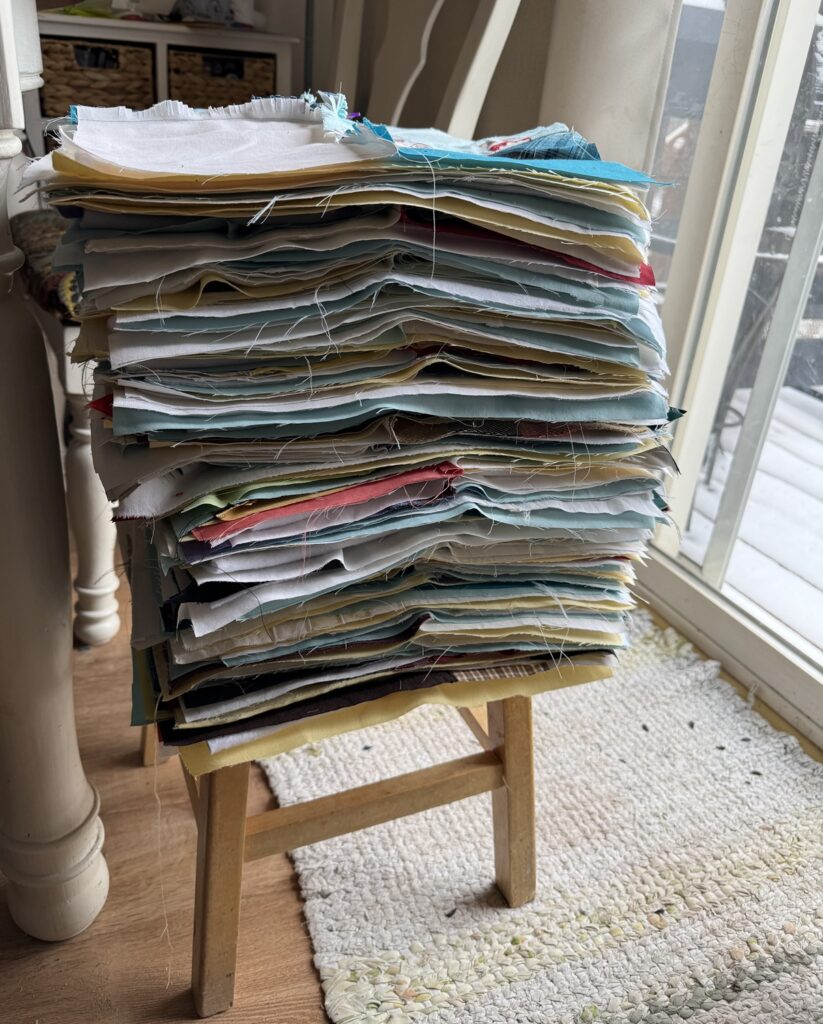
Before sewing the “X’s”, I made sure each layer was centered neatly. 2 Clips per side is a nice amount to keep the layers steady.
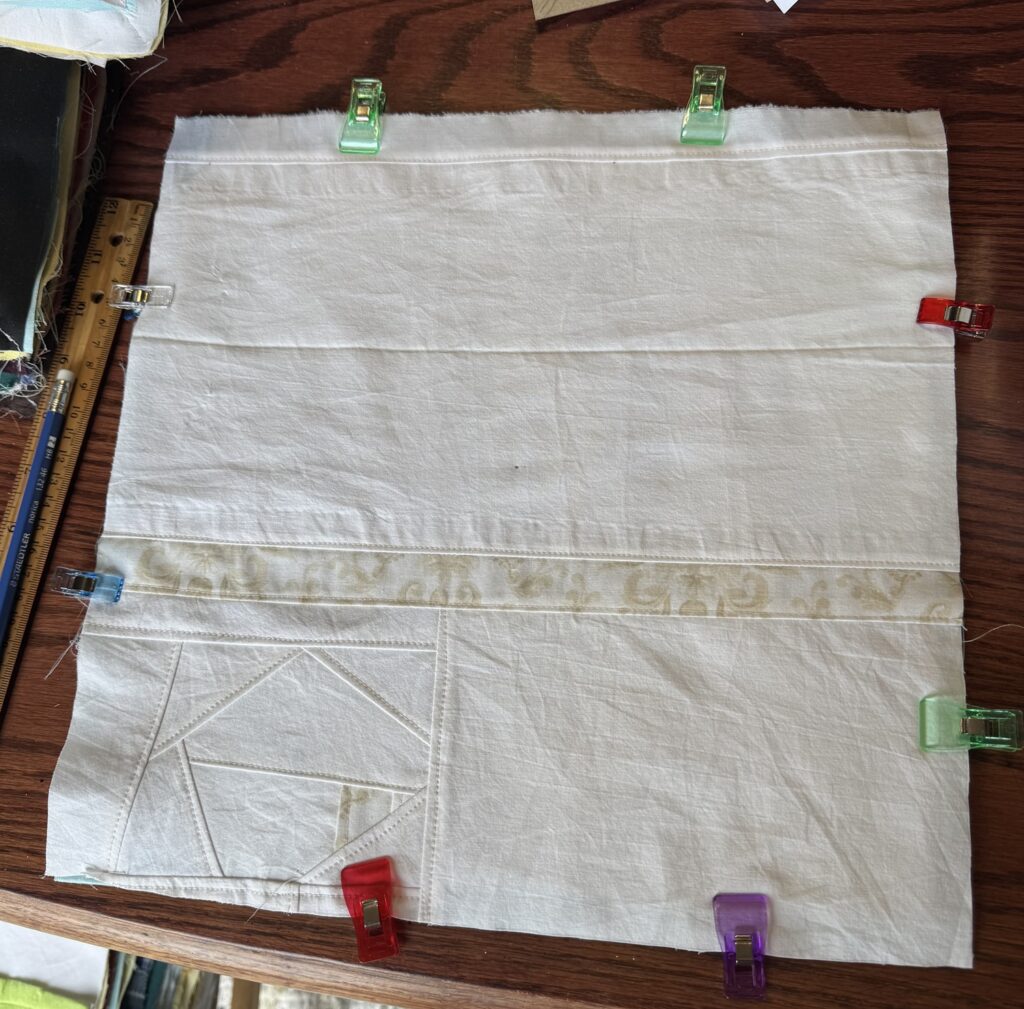
I kept the sewn layers in order so it would be easy to sew them into strips. Does this look like a CA king quilt?
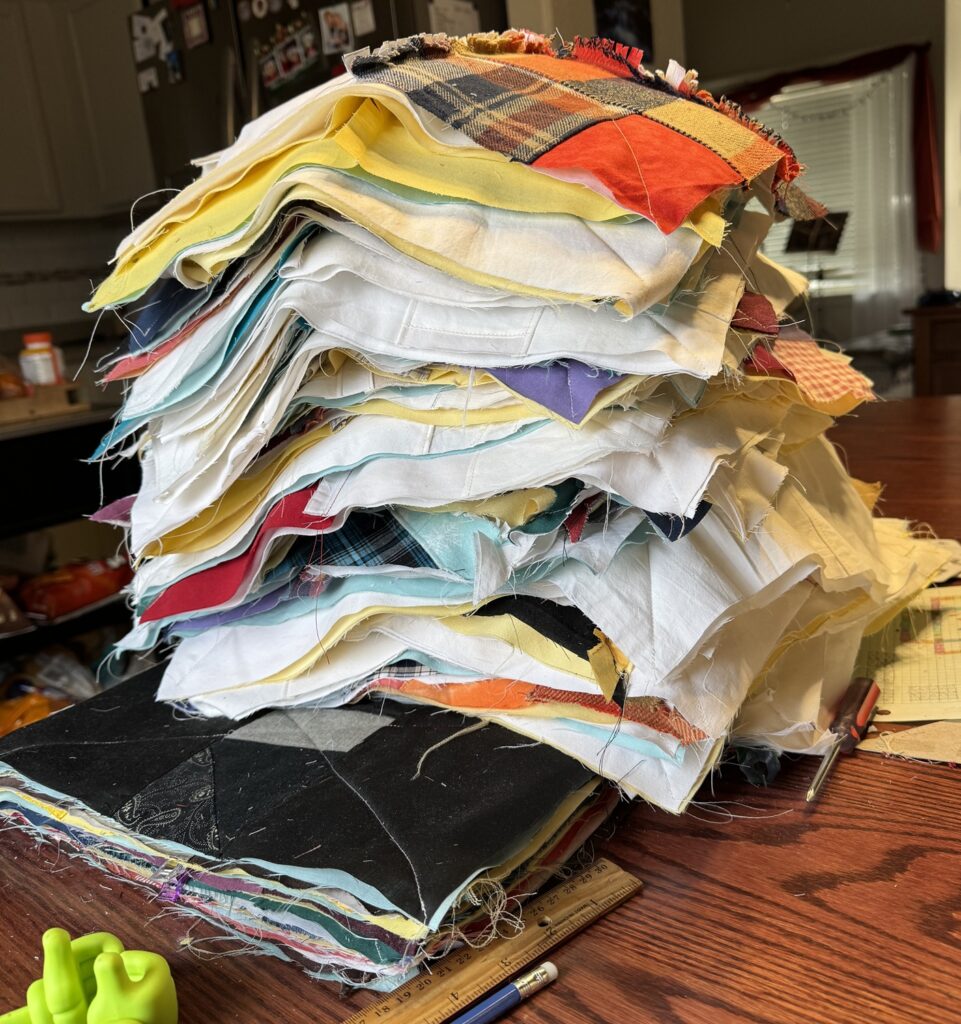
The plan is to sew them into strips, rag them, then sew 2 strips together at a time so it isn’t hard to sew the whole blanket together. This step took about 2 weeks, bringing the total working time up to 8 weeks.

**Some people sew two straight stitches per square or strip for extra durability.
Beginning a Scrap Rag Quilt – CA King

I am embarking on a large task, sewing a California king sized rag quilt! Do I have lots of time for this? Not really. I anticipate this quilt will take several months working in 10-30 minute snippets at a time. First, I made a plan.

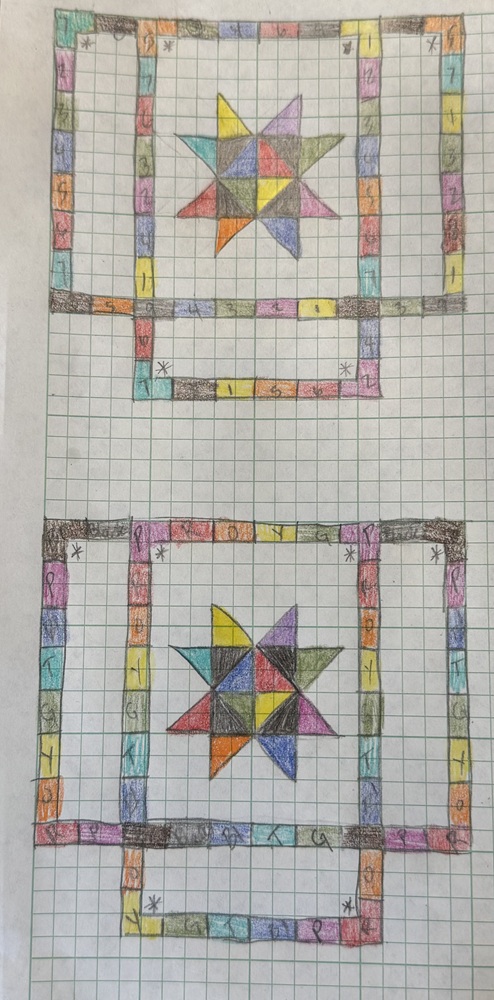
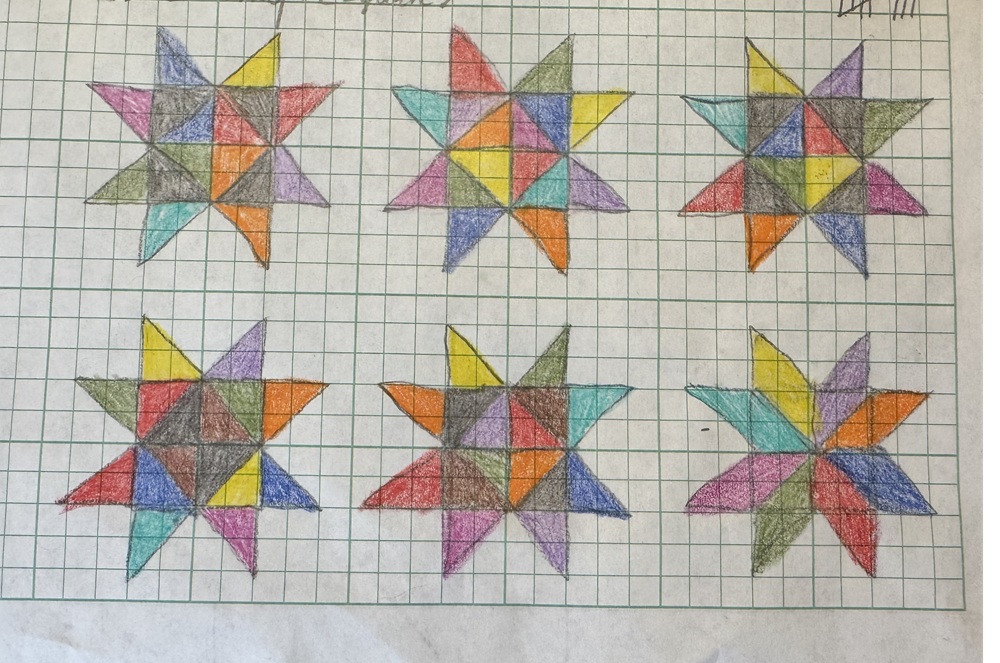
I decided on a star image with border sections. I sketched out several stars to try out different color placements. Next, I measured the bed (top and overhang desired) to determine what sized squares and triangles I would need. The top measured 72″ wide x 84″ long. The length of the sides could be 18-22″ long. I already know that I do not want the sides to touch the floor. With these dimension in mind, I decided on 12″ squares after being sewn together. I decided on 1/2″ seams on each side, so the squares need to be 13″.

Next, I sketched out a design. Many quilts used as bedspreads have a bunch of extra fabric in the corners. I don’t want all that fabric, so I decided to leave out the corner sections on the bottom of the blanket. If the quilt doesn’t close in the corners after being placed on the bed, I will come up with a creative solution for keeping the corners closed.

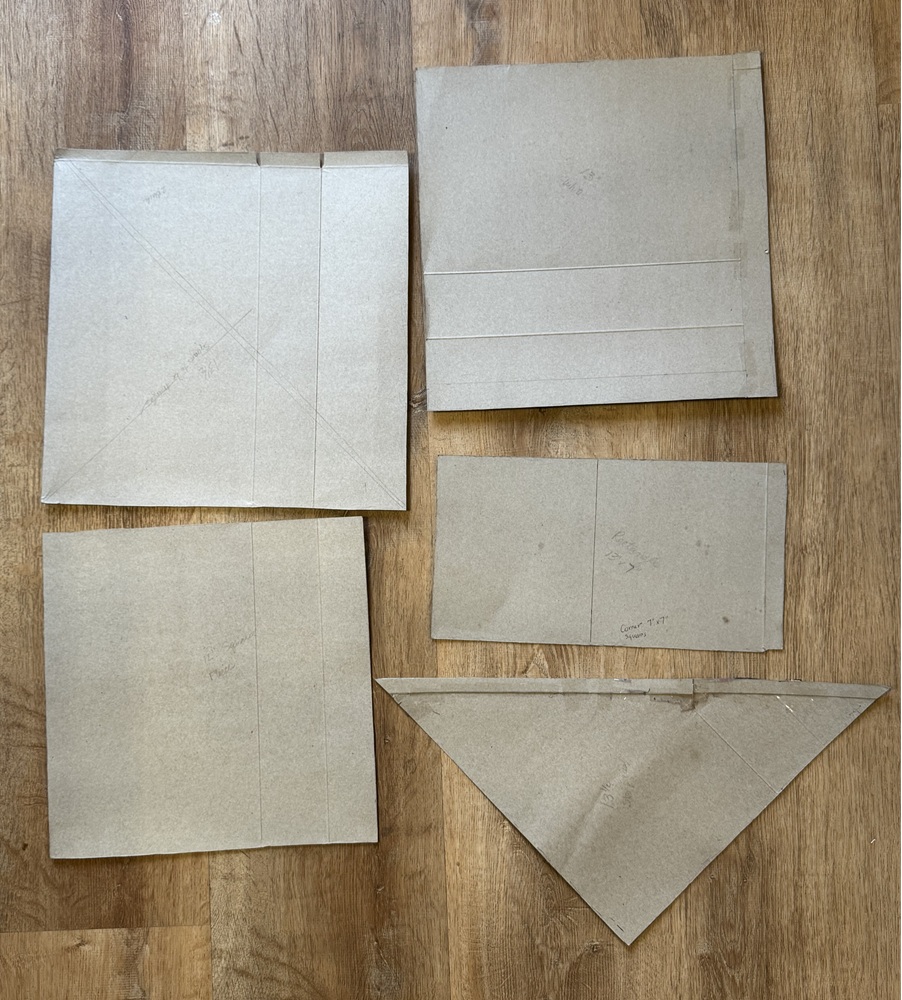
With this design in mind, I began tackling the shapes for the top. As drawn, I would need triangles, squares, and rectangles. Rag quilts often have 1/2″ (5/8″, 3/4″, or 1″) seams on the front/right side of the quilt that are clipped 1/8″ apart to create the rag look. Therefore, I cut the squares at 13″ to allow for a 1/2″ seam on each side. I cut the triangles to 13 1/2″ lengths (on the two sides that make the right angle, not the hypotenuse), but that ended up being just a tad short when I sewed the squares together. I recommend 14″ right triangles. The border is rectangles, and those were cut to 7″ x 13″ I don’t have special cutting equipment, so I decided to make cardboard templates from cereal boxes.

In addition to being a rag quilt, this is a scrap quilt. I decided to sew my remnant pieces together to create the star and border sections.

Because I couldn’t wait to see the star come together, I started my scrap quilt with the colorful triangles. I organized all my scraps by color and used the cardboard templates to make the triangles, squares, and rectangles.

Want to guess how long these steps took? Between homeschooling my two boys, driving my kids to appointments and activities, creating other sewing, weaving, and crocheted designs, the above steps took 6 1/2 weeks. Did I get frustrated? Normally I would have, but I decided that this project is allowed to take as long as it takes.

Next steps: Decide on the bottom fabric and colors, cut the bottom squares, cut middle fleece, then assemble the quilt.

Doily Mug Rug and Upcycling Doilies in We Like Sewing Magazine April 2025

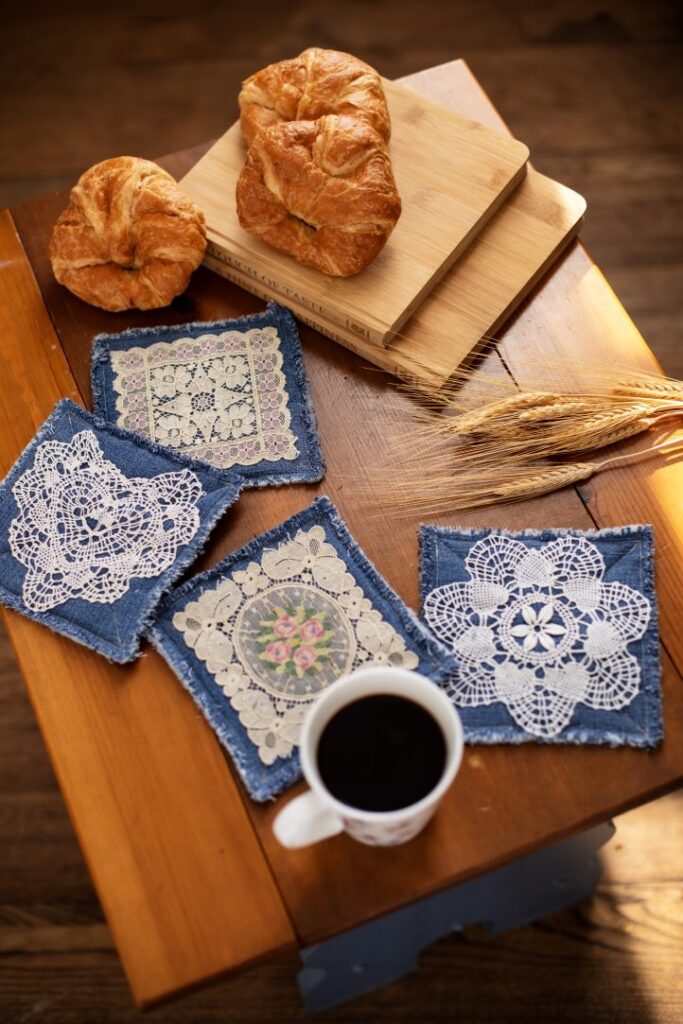
Photo courtesy of We Like Sewing magazine.

For the April 2025 issue of We Like Sewing online magazine, we wrote a sewing pattern and an article about doilies. We’ve grown to appreciate doilies more and more over the last few years. Back in the day, when our grandmother was crocheting them, we didn’t appreciate them, but now we do. There are so many new and exciting ways that people are using doilies, that it’s hard not to get excited about them.

As you can see in the photo above, we wrote a beginner friendly pattern for mug rugs. These are fun and quick upcycle projects that can be made in an hour. The denim is from upcycled denim jeans. The doilies were given to me by my aunt. Some had “Made in China” tags on them, so I felt comfortable upcycling them on the coasters.

Additionally, I, Dana, wrote an article with 11 ideas for upcycling doilies and lace in the article: Reduce, Reuse, Relace! In that I share ideas for decorating your home, updating clothing and creating useful items as well. I also share a few photos from my home where I’ve upcycled doilies and lace.

Check out our latest article and pattern on We Like Sewing April 2025 website.

The article I wrote is just a small sample of the amazing projects I saw online. I didn’t have time or space to share them all. But if you’re looking for a visual inspiration, check out the Pinterest board I created: Upcycle Doilies and Lace.

This article ramped up my appreciation of doilies so much that I sewed a doily on a playing card holder I made for my sister. This was also a denim upcycling project. Check out the doily on the Playing Card Holder Sewing Pattern.