Archives for December 2025

Weave a Pin Loom Triangle

Pin looms come in lots of shapes and sizes….including the humble triangle. This shape is a powerhouse for weaving fun projects. It extends the boundaries of creativity, making it a must have for your pin loom collection.

As it is with weaving a pin loom square, so it is with the triangle. The process for weaving a triangle is the same no matter the size. We’ll demonstrate how to weave on a 2″ triangle, but keep in mind that a 4″ and 6″ weave the same…they simply have more repeats.

Pin looms can be found at some independent yarn shops, Etsy and Amazon. And you can build your own pin loom. There are 2 different types of pin looms: ones with evenly spaced pins and those with a 3 pin configuration. This post teaches you how to pin loom weave a triangle with a 3 pin configuration.

How to Weave a Pin Loom Triangle VIDEO

Weaving a pin loom triangle is simple, but can be a bit frustrating because warp strands are closer together (especially at the corners). Learn how to weave a triangle with this short video.

Weave a Pin Loom Triangle – Illustrations

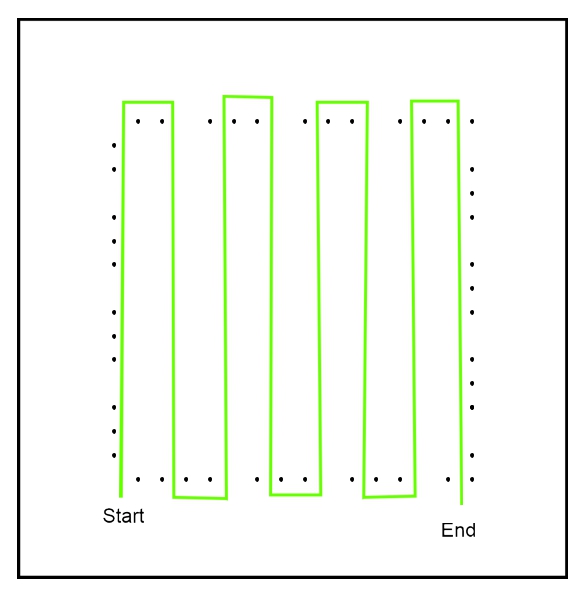
Below are several illustrations for weaving a pin loom triangle. It’s accomplished in 4 layers: 3 warp and 1 weave. The pins on the hypotenuse are evenly spaced which makes weaving the triangle different than the square.

Note about the illustrations: The drawings show lines that are cattywampus, but when you weave them, your strands will be nice and straight.

Note about the pin spacing: our pin loom templates intentionally have the top pin slightly out of alignment for easier weaving. The finished woven triangle will look nice and neat.

Layer 1: Warp 1 (Illustrated in Green)
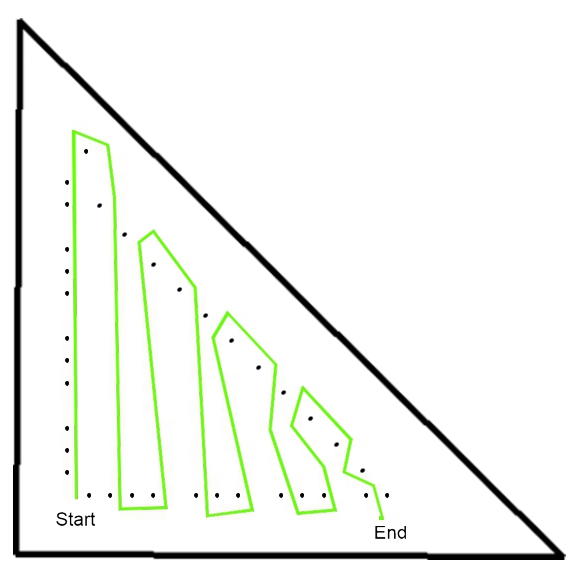
Orient the pin loom so the start arrow is in the bottom left corner. The right angle will be the left corner.

  • Hold the yarn at the start (to the left of the 4 pins), bring it up to the top and wrap it right across the first 2 pins.
  • Bring yarn back down to bottom row of pins and between pin 2 and 3.
  • Wrap yarn to the right across 2 pins (pins 3 and 4).
  • Bring yarn back to top. Skip a pin, wrap yarn across next 2 pins.
  • Bring yarn back down, skip a pin, wrap across next to 2 pins.
  • Repeat previous 2 steps across ending with yarn between last 2 pins at bottom right corner.

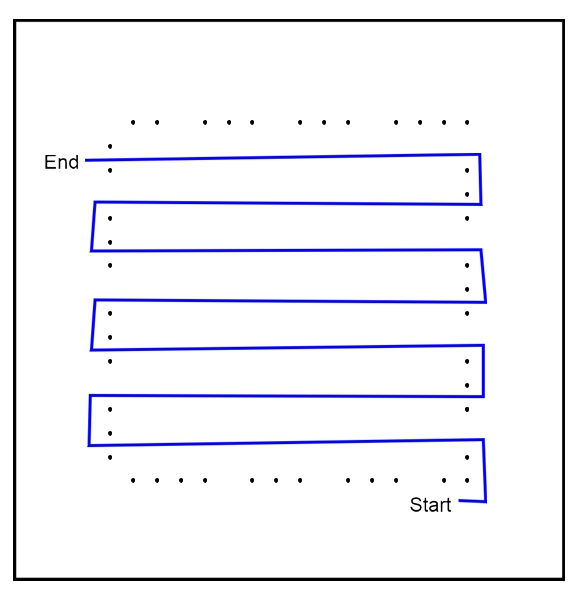
Layer 2: Warp 2 (Illustrated in Blue)
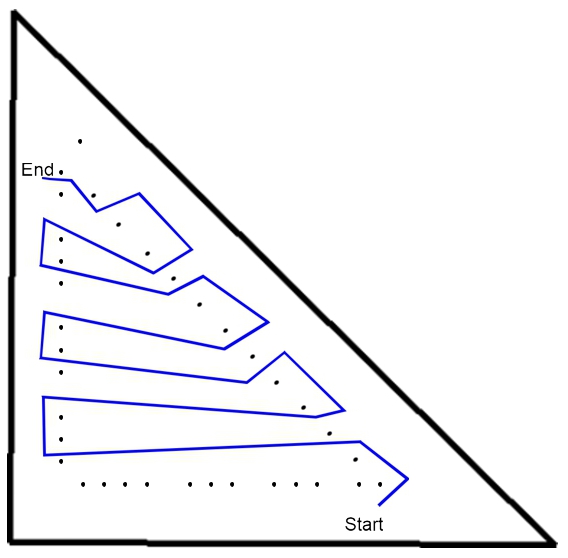
This layer will work right to left. Continue where you left off at warp layer 1.

  • Bring yarn to right side.
  • Bring yarn up and wrap across 2 pins.
  • Bring yarn to left side of loom, skip 1 pin, wrap yarn across next 2 pins.
  • Bring yarn to right side of loom, skip 1 pin, wrap across next 2 pins.
  • Repeat previous 2 steps to the top.
  • Finish by bringing yarn to the left between pin 1 and 2 near the top.

Layer 3: Warp 3 (Illustrated in Red)
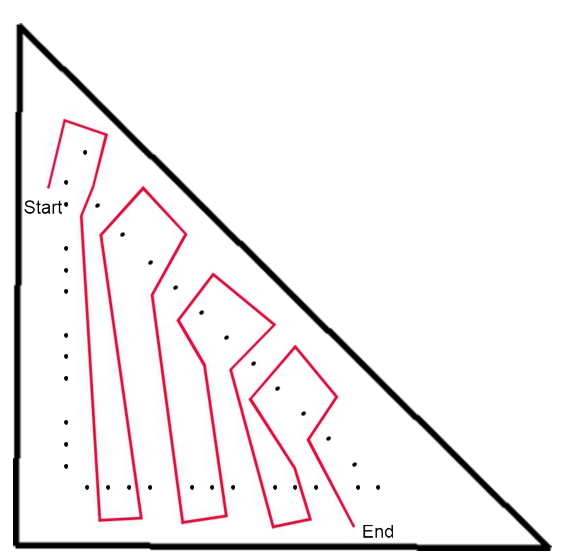
This layer will work from top to bottom. Continue from where you left off at warp layer 2.

  • Bring yarn to the top around the 1st pin of the hypotenuse.
  • Bring yarn to bottom, skip the 1st pin, wrap yarn across 2 pins.
  • Bring yarn to top, skip 1 pin, wrap yarn across 2 pins.
  • Bring yarn to bottom, skip 1 pin, wrap yarn across 2 pins.
  • Repeat previous 2 steps across.
  • Finish at the bottom, skip 1 pin, place yarn in gap with 2 pins to the right.

Step 4: Weave (Illustrated in Black)
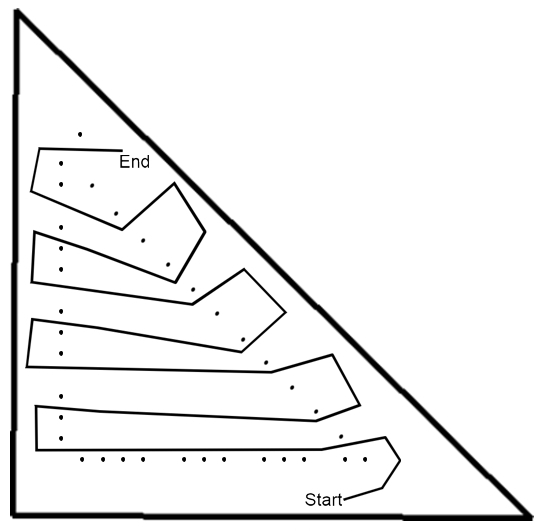
This layer will be worked right to left. Continue from where you left off at warp layer 3.

  • Before starting this layer, you need to measure out a length of yarn for weaving. Wrap the yarn around the outside of the pins (around all 3 sides) 4 to 6 times. This will give you enough yarn to weave and a little extra for joining shapes together.
  • Cut the yarn after the last wrap, unwrap yarn back to end of last warp, and place yarn on weaving needle.
  • Plain weave is the most common pattern. You will bring needle under a strand, then over the next strand, repeating under/over all the way across.
  • Begin at right side of loom. Look for yarn that wraps across 2 pins, which is the first 2 pins on the bottom right. The needle will always go over the loop (See ***Special Weaving Note below if there are 2 strands at the start of your weaving row).
  • Because you are starting in a corner, it may be challenging to see the different yarns to weave under and over. You can tell which to go under because the strand will be lower/recessed. The strand to weave over will be higher/raised. Weave under/over across.
  • Pull yarn all the way through.
  • Now weave left to right (next is weaving between pins 2 and 3). Place yarn over the strand across the pins and weave as normal: under/over across.
  • ***Special weaving note. The next row is woven right to left and you’ll notice there are 2 strands wrapped around these pins (see photo below). YOU MUST WEAVE THEM INDIVIDUALLY as follows:
    • With weaving needle, push top strand to right, exposing the strand below.
    • Now, put your needle under that second/lower strand. This is your 1st under.
    • Weave the remainder of the row as normal: over/under across.
  • Continue weaving the remainder of the rows under/over across. Note that the hypotenuse side will often have 2 strands wrapped across the pins. Weave them as mentioned above.
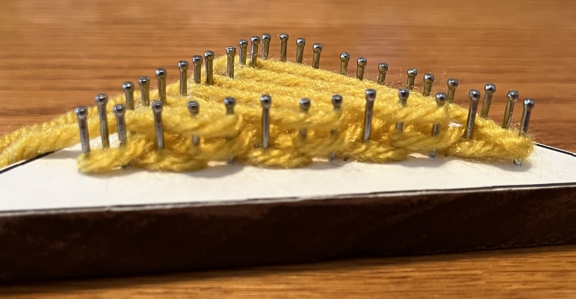
Photo shows the hypotenuse side of the triangle where some pins have a double wrap. See ***Special Weaving Note above for how to weave those end strands so your triangle looks nice and tidy on this side.

Yarn Size

Traditional pin looms are designed to be woven with light weight (size 3) and medium worsted weight (size 4) yarns. Since the triangle is a little bit trickier to weave than the square, we recommend that you weave your first triangle with cotton thread. That will allow you to see how all the strands interact with the pins.

Yarn Fiber

The type of yarn you use will also impact how easy you triangle is to weave. Yarns with some elasticity will be easier to weave with because they have some stretch and give.

  • Easier yarns: acrylic, wool and other animal fibers.
  • Difficult yarns: cotton, bamboo and other plant fibers.
  • Learn more in our Selecting Yarn to weave post.

Tips for Weaving

We share 11 Tips for Pin Loom Weaving in another post. It was written with the 4″ square in mind, but the concepts will translate well to weaving a triangle. For instance:

  • We recommend that you leave a long tail so you can joins woven shapes together.
  • After weaving a row, you can beat down the strands with your weaving needle or a dinner fork.
  • You will want to use both hands when you weave the pin loom triangle. One moves the needle while the other moves warp strands aside so you can weave more easily. Sometimes I’ve even used a yarn needle to move strands aside so I can find where to place my weaving needle.

Pin Loom Triangle Patterns
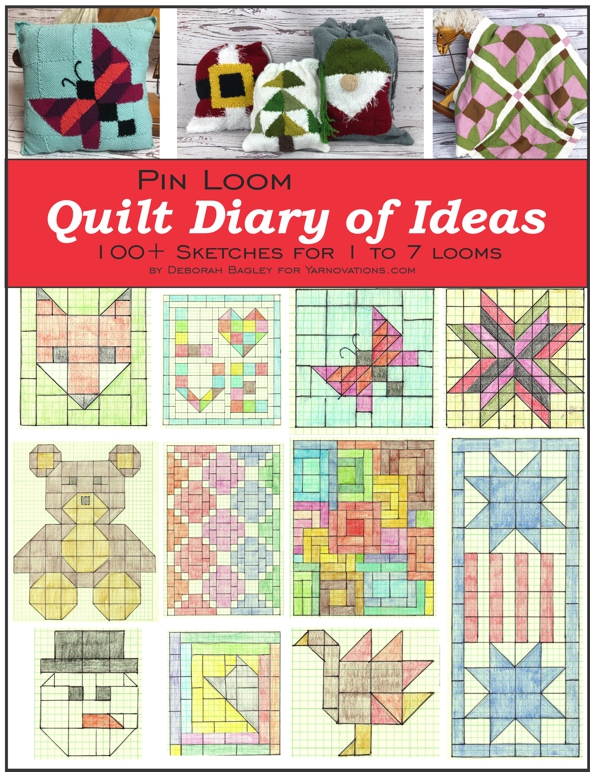
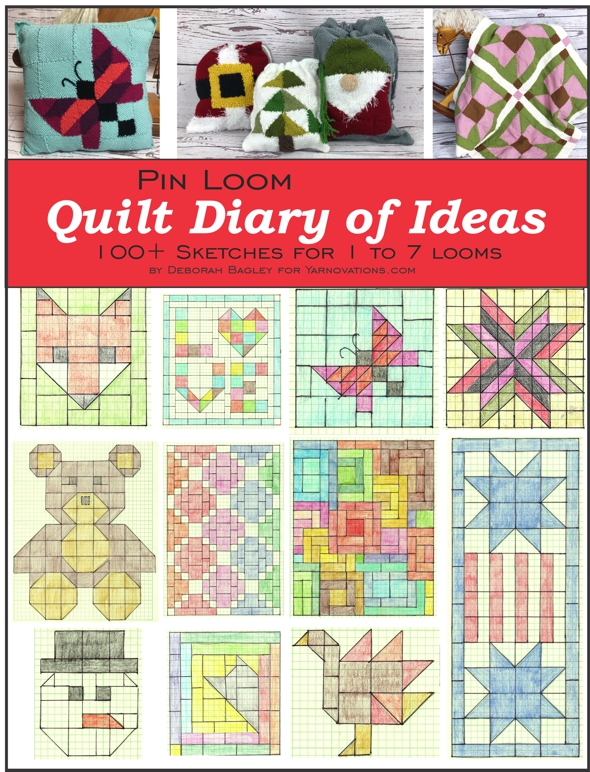
What can you make with pin loom triangles? Lots of things, especially if you combine them with squares (and/or rectangles). One of our favorite patterns is the Quilt Diary of Ideas which has chapters devoted to single shapes and other chapters for multiple shapes.

Check out our YarnovationsShop on Etsy for fun and exciting pin loom patterns.

Can’t find a triangle loom? Build your own pin loom triangles (squares and rectangles, too).
Weave a Pin Loom Square or Rectangle

Pin loom weaving is a lot of fun and quite simple. The 4″ square is the most popular size pin loom to weave and the most readily available. It can be found in lots of independent yarn shops as well as Amazon and Etsy. You can build your own pin loom, too.

Weaving a pin loom square is the same no matter the size. A 2″ is woven in the same manner as the 4″. The 4″ will just have more rows to repeat. Likewise, the 6″ loom will have even more rows to repeat. A rectangle is also woven like a square, it’s just wider.

There are 2 main types of pin looms on the market: 3 pin configuration vs evenly spaced pins. This tutorial shows how to weave a square with a 3 pin configuration.

Weave a Pin Loom Square (or rectangle) VIDEO

Weaving a pin loom square is really easy. Learn how with this short video.

Pin Loom Weaving a Square – Illustrations

Don’t have time to watch the video? Below we have several illustrations for weaving a 2″ pin loom square. It’s accomplished in 4 layers: 3 warp and 1 weave.

Layer 1: Warp 1 (Illustrated in Green)

Orient the pin loom so the start arrow is at the bottom left. Most pin looms will have an arrow indicating where weaving should start. In this case, look for a cluster of 4 pins at bottom left corner with no pin at the top left corner. This layer will be worked bottom to top.

  • Hold yarn at start, bring yarn to top row and wrap it across the 2 pins there.
  • Bring yarn back down between pin 2 and 3 and wrap it across pins 3 and 4.
  • Bring yarn back to top, skip 1 pin, wrap it across the next 2 pins.
  • Bring yarn back down to bottom, skip 1 pin, wrap it across the next 2 pins.
  • Repeat previous 2 steps to end.
  • End by bringing yarn back to the bottom between last 2 pins.

Layer 2: Warp 2 (illustrated in Blue)

This layer will work right to left. Continue from where you left off at warp layer 1.

  • Bring yarn to the right side.
  • Bring yarn up and wrap across 2 pins.
  • Bring yarn to left side of loom, skip 1 pin, wrap yarn across next 2 pins.
  • Bring yarn to right side of loom, skip 1 pin, wrap yarn across next 2 pins.
  • Repeat previous 2 steps to top.
  • End on left side between last 2 pins.

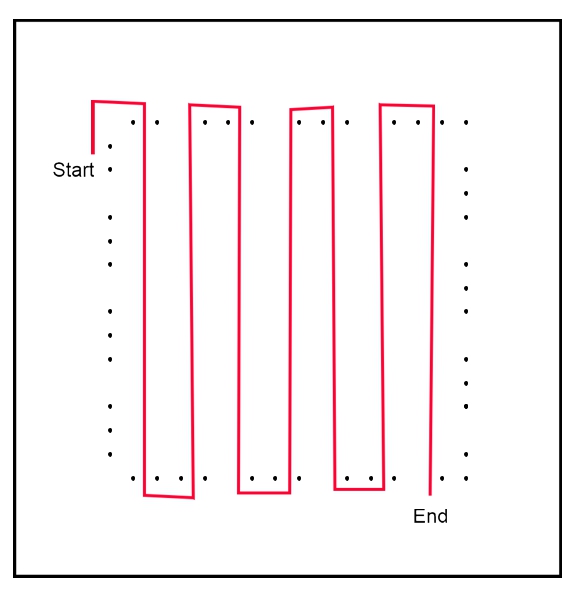
Layer 3: Warp 3 (illustrated in Red)

This layer will work from top to bottom. Continue from where you left off at warp layer 2.

  • Bring yarn to top of loom. Wrap it across 1st pin.
  • Bring yarn to bottom of loom. Skip a pin, wrap it across 2 pins.
  • Bring yarn to top of loom. Skip a pin, wrap it across 2 pins.
  • Repeat previous to steps across.
  • End with yarn in the gap to the left of the last 2 pins.

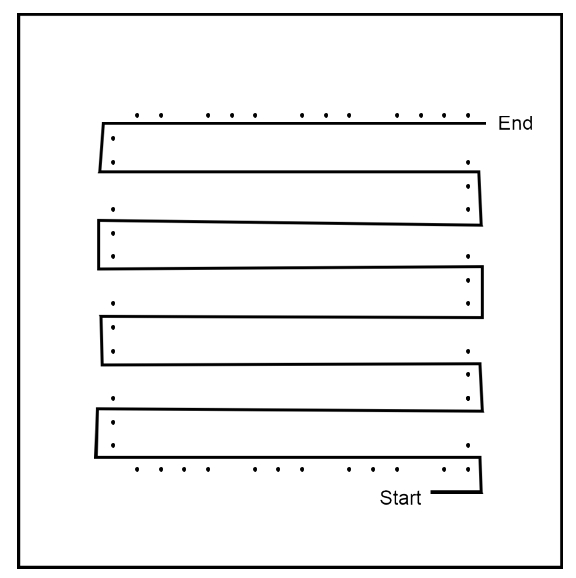
Step 4: Weave (illustrated in Black)

This layer will work left and right. Continue from where you left off at warp layer 3.

  • Before starting this layer, you need to measure out a length of yarn for weaving. Wrap the yarn around the outside of the pins (around all 4 sides) 4 to 6 times. This will give you enough yarn to weave and a little extra for joining shapes together.
  • Cut the yarn after the last wrap, unwrap the yarn back to end of last warp and place yarn on weaving needle.
  • Plain weave is the most common pattern. You will bring needle under a strand, then over the next strand, repeating under, over all the way across.
  • Begin on right side. Look for the yarn that wraps across 2 pins, which is the 1st 2 pins on the bottom right. The yarn always goes over the loop that was wrapped across the pins.
  • Start by weaving the needle under the next strand, then over the next. You can tell which strand to weave under because it will be lower/recessed. The strand to weave over will be higher/raised.
  • Pull yarn needle all the way through.
  • Now weave from left to right (next up is weaving between the 2nd and 3rd pin).
  • Continue weaving back and forth. The last weave will be right next to the pins at the top.

Pin Loom Weaving Tips

Yarn Fiber

Some yarns are easier to weave with than others. Yarns with some elasticity are easier to weave because they can stretch a bit.

Weaving Tension

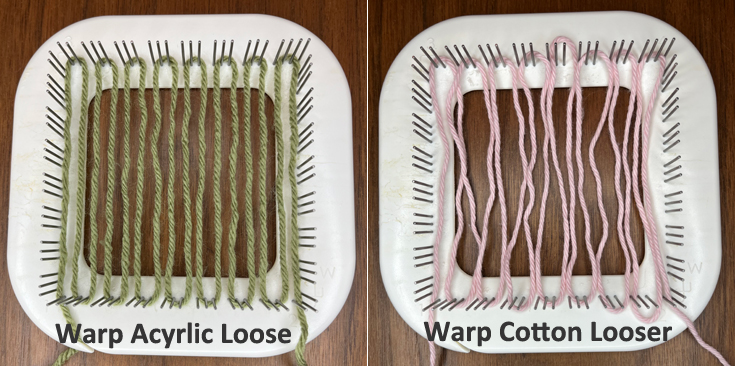
warping pin loom with acrylic vs cotton

When warping the pin loom, wrap with a light touch. Don’t stretch the warp. It will tighten up with each strand you weave. For cotton yarn, warp extra loose.

Tips for Weaving

Read our post 11 Tips for Pin Loom Weaving for more detail. Here are a few of our favorites:

  • Leave a long tail for joining woven shapes together.
  • Pack or beat the yarn after you weave a row. This will leave a gap for weaving the next row. You can use a kitchen fork for this!
  • It’s ok to use both hands to weave. Use one hand to move the needle and the other to move strands in or out of the way for weaving.

Want another take on how to pin loom weave? Schacht spindle company has granted us permission to share their weaving images from the Zoom Loom. Learn more about How to Weave on a Pin Loom.

So what can you make with pin loom woven shapes? Check out our YarnovationsShop on Etsy for some fun ideas.

Make a Pin Loom – Pattern

Pin loom weaving is fun…and even more so if you have looms of various shapes and sizes! There are several small and independent companies that manufacture pin looms. We highly recommend them. However, it can be hard to find pin looms in stores (other than weaving friendly yarn shops).

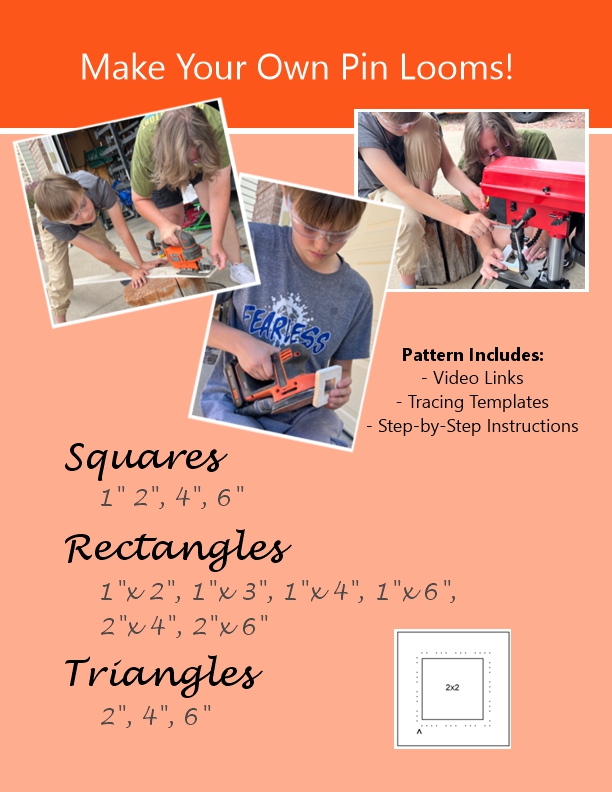
In order to get all the pin loom shapes you might need, you can make your own! This pattern includes pin loom templates for squares, rectangles and triangles measuring 1” up to 6”. Not only can you build your own, we show you how to build them with common household items.

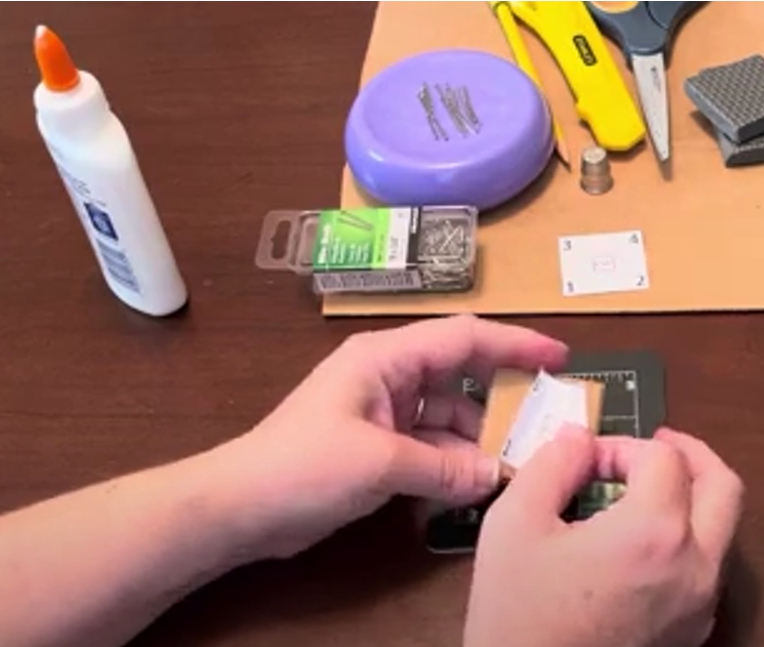
You can make a pin loom from items such as cardboard and straight pins. Those work ok for really small looms like the 1″ square and if used lightly. If you weave regularly or like the larger shapes, we recommend that you build a loom from wood like MDF or plywood and brad nails, all found at your local hardware store.

Build a Pin Loom Step-by-Step

The pattern for Making Your Own Pin Loom is awesome! It answers lots of questions you may have and offers step-by-step information for building a pin loom start to finish:

  • Step-by-Step Written Instructions
  • Tons of Photos
  • VIDEO link to Build a Loom from Cardboard or Foam
  • VIDEO link to Build a Loom from Wood
  • VIDEO link to Weaving a Square (or Rectangle)
  • VIDEO link to Weaving a Triangle
  • Links to Where to Buy Ready Made Pin Looms
  • Templates for Squares: 1″, 2″, 4″, 6″
  • Templates for Rectangles: 1″x2″, 1″x3″, 1″x4″, 1″x6″
  • Templates for Rectangles: 2″x4″, 2″x6″
  • Templates for Triangles: 2″, 4″, 6″
  • Materials List for Building Looms on Cardboard, Foam or Wood

Make a Pin Loom Pattern on Etsy

Buy the pattern with templates to Make Your Own Pin Looms in our Etsy shop.

Available now on Etsy.

Buy the pattern on etsy

Pin Loom Weaving Patterns

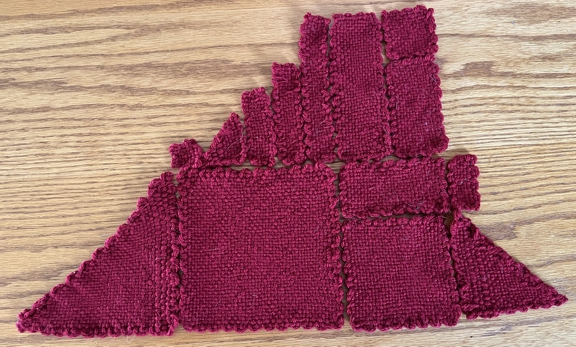
Pin looms are great for weaving up little fabric shapes. These shapes can be sewn together to create countless woven projects from coasters to blankets, to stuffed animals and decorations. You can make a ton of adorable projects with a simple square…but the possibilities are limitless with additional pin loom shapes like rectangles and triangles.

Visit our Etsy shop for lots of fun and exciting pin loom patterns to weave!

Pin Loom Flock Pattern

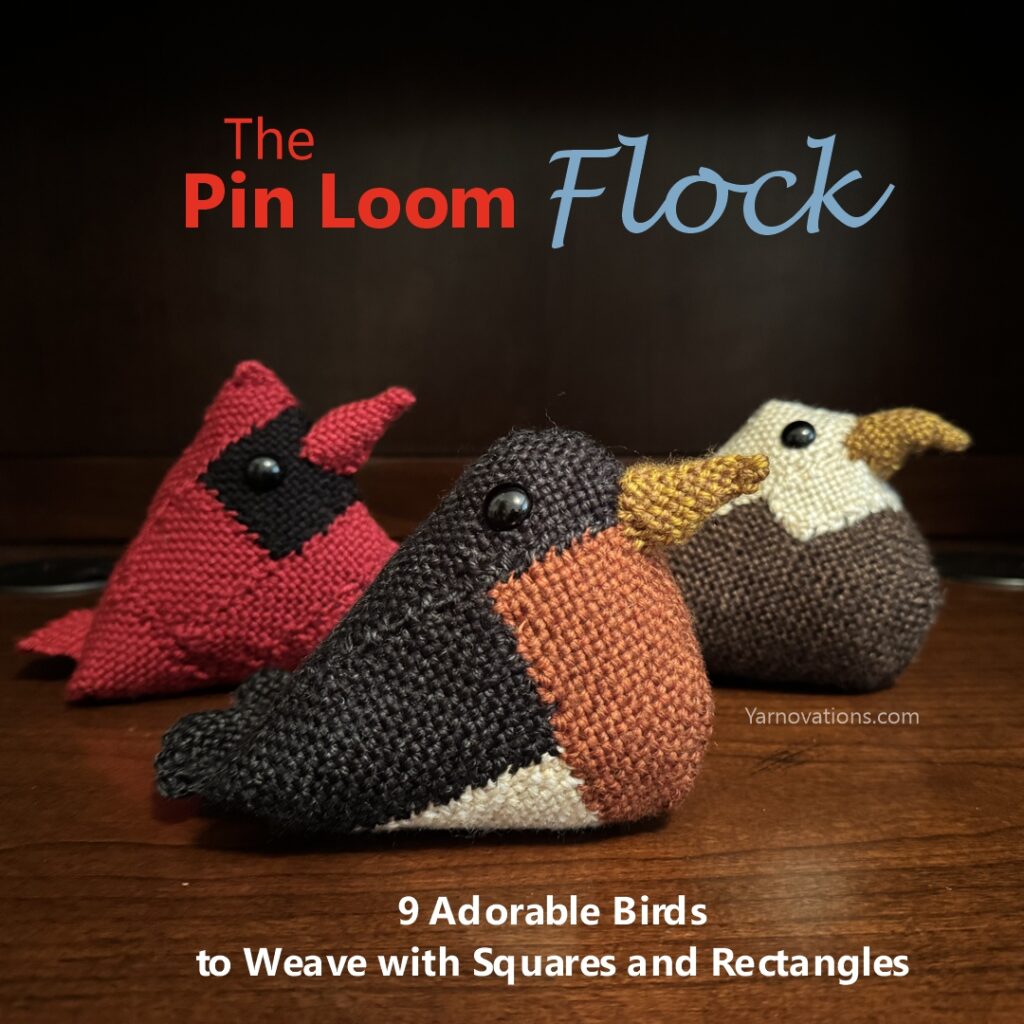
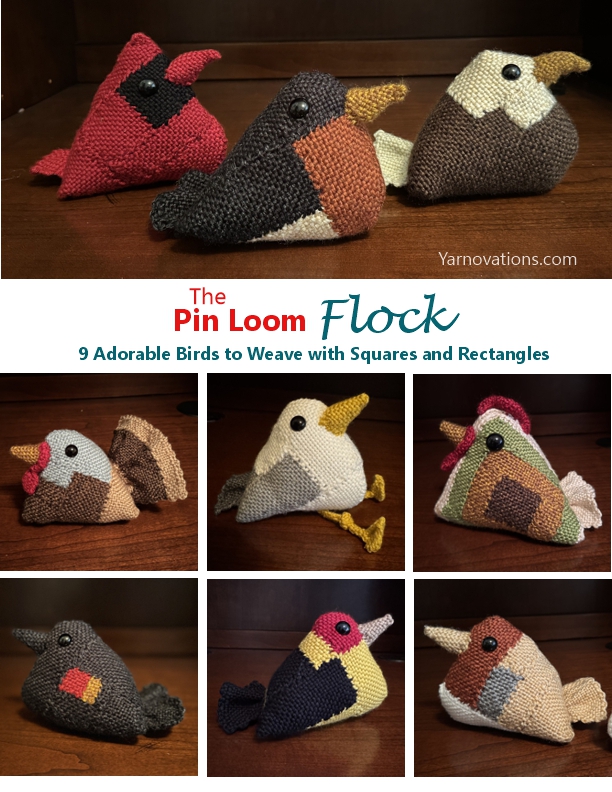
Introducing…The Pin Loom Flock: 9 Adorable Birds to Weave with Squares and Rectangles. Inspired by the Birds of a Feather crochet pattern, we’re excited to bring our most popular birds to the pin loom community.

9 Gorgeous Birds included in the pin loom pattern:

  • Bald Eagle
  • Cardinal
  • Chicken
  • European Robin
  • Red-Winged Blackbird
  • Robin (and a mini Robin)
  • Seagull
  • Turkey
  • Western Tanager

Shhh…I have a secret for you. All these birds can be made from 2 pin looms (the Robin can be made from 1!). We used 3 to 5 different looms to make each bird so there would be less tails to weave in, but you can make them with a 2″ square and 1″x4″ rectangle (with folding of the rectangle in some cases).

Pin looms we used to make all the birds include:

  • Squares: 1″, 2″, 4″, 6″
  • Rectangles: 1″x2″, 1″x4″, 2″x4″, 2″x6″

The Pin Loom Flock on Etsy

The pin loom pattern to make the Pin Loom Flock is available now on Etsy.

Available now on Etsy.

More about The Pin Loom Flock Pattern

The Pin Loom Flock is a beginner friendly pattern. Every square and rectangle will be woven in plain weave and joined with a simple overcast or your favorite join method. The birds measure: 5.5” length x 6.5” width x 4.5” height. The Chicken measures 7.75” x 5.75” x 6” because it has a couple rounds of single crochet (it is the only bird with crochet).

The pattern includes written instructions as well as helpful photos for rolling and folding shapes to make feet, beaks, wattles, snoods and combs. There are helpful charts to show yarn and loom sizes used to make each bird.

Materials needed are minimal and include:

  • Yarn: Size 4 medium worsted weight
    (Pattern used: Lion Brand Heartland and Basic Stitch, acrylic)
  • Pin Looms (see list above)
  • Weaving Needle (6″) and Yarn Needle
  • Stuffing
  • Safety Eyes: 14 mm – 2 each bird (chicken 18 mm)
  • Crochet Hook (chicken only): G/4.0mm

Birds for the Holidays and Special Occasions

The birds are fun to make for bird lovers, but they are also fun for several holidays and other special occasions.

  • Christmas Bird: Cardinal
  • Thanksgiving Bird: Turkey
  • Halloween Bird: Blackbird (made in solid black as a Crow/Raven)
  • Wedding Bird: Make the Robin in white as a Dove.
  • Sports Teams: Cardinals, Eagles, Falcons, Ravens

Make one of these birds as a Thinking of You gift and add a little encouragement note:

  • “Fly high, little bird!”
  • “Trust your wings.”
  • “Sing your song.”

These little birds are fun sitting on a shelf or at your desk.

Get your copy of The Pin Loom Flock in our Etsy shop now.